The best turbo upgrade for 7.3L Power Stroke depends on whether the truck needs a sound replacement for a worn turbo or more airflow for a planned performance build. Those are different jobs. A complete stock-style replacement can be useful without offering the bearing system or compressor design of a dedicated performance turbo.

The four options below focus on the later Super Duty-era 7.3L application. Garrett’s PowerMax GTP38R is the overall pick for its dual ball-bearing cartridge, ported-shroud compressor housing and published model-specific specifications. The JM and AKWH units take a replacement-oriented approach, while XS-Power offers its own GTP38R-style upgrade. Early-1999 trucks, older-body trucks and vans need separate application checks.
Best 7.3 Turbo Upgrades — Comparison Table
XS-Power GTP38R-Style 1.00 A/R Turbo
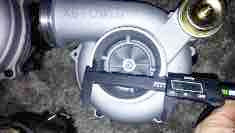
XS-Power’s GTP38R-style turbo is its own aftermarket design, not a Garrett-branded PowerMax. The manufacturer specifies the 1999.5–2003 7.3L Power Stroke application and an 88 mm compressor-wheel exducer. It is aimed at an owner looking beyond a basic stock-style replacement.
The ported-shroud compressor housing is intended to broaden the useful compressor-flow range and help manage surge. XS-Power also specifies a 1.00 A/R housing configuration. Those are more meaningful details to compare than a generic promise of extra horsepower: the turbo has to work with the engine’s fuel delivery and the operating range used most often.
This is most appealing as part of a coordinated build, where compressor size and turbine response have been chosen together. A larger wheel does not guarantee quicker response at low engine speed, and the XS-Power design should not be treated as interchangeable with a genuine Garrett merely because both use GTP38R terminology. Follow the specific installation and boost-control requirements for this unit.
Pros
- Manufacturer-specified 1999.5–2003 7.3L application.
- 88 mm compressor exducer and ported-shroud housing.
- A more explicitly upgrade-oriented design than a basic replacement turbo.
Cons
- Separate aftermarket design from the genuine Garrett PowerMax.
- Compressor size needs to suit the fueling and desired response.
JM Turbo JM-F

The JM-F is a complete GTP38-style replacement for the 1999.5–2003 F-Series 7.3L Power Stroke application. Its conventional compressor-and-turbine layout makes it a more straightforward proposition for a truck being returned to service than a large custom turbo conversion. The assembly includes an externally mounted wastegate actuator.
That replacement-oriented layout is its main appeal. The compressor housing, turbine housing and actuator arrive as one assembly, rather than leaving the owner to rebuild a worn center section and reuse every external component. For a largely standard truck, keeping the installation close to the original arrangement can matter more than chasing a larger compressor wheel.
The JM-F should be chosen as a replacement turbo, rather than on the expectation of PowerMax-style ball-bearing response or a guaranteed increase in towing performance. Match the original turbo’s connections and exact late-1999 application before installation. A healthy oil supply, clean intake and sound boost plumbing are still essential to the finished result.
Pros
- Complete turbo assembly with a mounted wastegate actuator.
- GTP38-style layout for the specified late-1999–2003 application.
- A replacement-focused option for a largely standard truck.
Cons
- A replacement layout does not establish a performance increase.
- Early-1999 and other 7.3L applications need a different fitment assessment.
AKWH GTP38 Replacement Turbo

The AKWH unit is another replacement-oriented choice, with stated applications covering late-1999–2003 F-Series trucks and 2000–2003 Excursion models with the 7.3L Power Stroke. Its reference numbers include 1831383C92, 1831383C94 and F81Z6K682CARM, giving an owner useful identifiers to compare with the original assembly.
The complete assembly brings together the compressor housing, turbine housing and wastegate actuator. That suits a repair where replacing the whole turbo is preferable to installing an individual wheel or rebuilding the center section. The housing shape and pipe connections remain important, particularly on a truck that has already received intake or exhaust changes.
AKWH uses both GTP38 and GTP38R references, but this product should be treated as an AKWH replacement, not as the genuine Garrett ball-bearing upgrade reviewed next. It is a sensible type of option when the goal is to restore normal operation on the specified application. Extra towing capacity, improved fuel economy and lower exhaust temperature are not automatic consequences of the swap.
Pros
- Application details distinguish late-1999 trucks from early-1999 versions.
- Multiple original-part references aid identification.
- Complete assembly with a wastegate actuator.
Cons
- Not a genuine Garrett PowerMax unit.
- A sound replacement does not change the truck’s rated towing capacity.
Garrett PowerMax GTP38R 739619-5004S (Editor’s Choice)
The genuine Garrett PowerMax GTP38R is the strongest upgrade choice in this group for a matched 1999.5–2003 7.3L Power Stroke build. Its dual ball-bearing cartridge is a specific mechanical distinction from an ordinary replacement turbo. The supporting compressor and turbine specifications also give the installer a firmer basis for matching the unit to the engine.
Garrett specifies a 66 mm compressor inducer and 88 mm exducer, a ported-shroud compressor housing and a 1.00 A/R turbine housing. The ported shroud helps extend the compressor’s useful operating range, while the turbine housing is intended to improve exhaust flow. The kit includes the inlet connection components shown with the turbo, rather than being just a loose replacement wheel.
The PowerMax makes most sense when airflow, fueling and tuning are planned as a package. Its published power capability is not the output a standard truck will gain from fitting the turbo alone. The larger compressor and housing also need to suit low-speed response and towing use, so it is a more involved choice than simply replacing a failed stock unit.
Pros
- Genuine Garrett dual ball-bearing cartridge.
- Published 66/88 mm compressor dimensions and a ported shroud.
- Model-specific PowerMax kit with a 1.00 A/R turbine housing.
Cons
- Needs to be matched to the engine’s fueling and intended operating range.
- A turbo-only installation does not deliver its maximum published power capability.
How to Pick the Best Turbo Upgrade for 7.3L Power Stroke
Decide Whether the Job Is a Repair or a Performance Build
A replacement turbo and a performance upgrade solve different problems. If a worn unit is the fault on an otherwise standard truck, a correctly matched replacement may be the appropriate repair. A larger compressor or a different turbine housing needs to be selected around the engine’s fuel delivery, tuning and working speed, rather than bought simply because its power rating is higher.
Check the Exact 7.3L Application
The 7.3L Power Stroke was used with different turbo arrangements. Late-1999 Super Duty fitment is not the same as early-1999, older-body trucks or every van application. Check the engine build date, original turbo identification, intake connection, exhaust connection and mounting arrangement. The products here should not be treated as universal replacements for every 7.3L diesel.
Look Beyond Wheel Diameter
Compressor inducer and exducer measurements describe different parts of the wheel. The 88 mm figure on the Garrett GTP38R is its compressor exducer, not its inlet diameter. Bearing design, compressor housing, turbine sizing and the engine’s operating range all matter. An A/R number describes a housing’s geometry; it is not a horsepower rating.
Match the Turbo to Towing and Daily Use
A truck that works under load at modest engine speed needs a different balance from a dedicated high-output build. Response, usable airflow and exhaust temperature should be considered together. More boost alone does not prove a better match, and a turbo upgrade does not increase the vehicle’s rated towing capacity.
Plan Installation and Supporting Work
Before replacing the turbo, establish that the fault is in the turbo rather than a leaking intake connection, damaged hose or another engine problem. Follow the exact manufacturer’s installation procedure, use the specified seals, inspect the oil supply and drain, and keep debris out of the intake and oil passages. The condition of those supporting systems matters to the new unit as much as the choice of turbo.
Compare the Complete Upgrade Cost
Compare more than the turbo itself. Inlet hoses, seals, connection parts, monitoring and any necessary fueling or tuning work can change the scope of the job. A complete kit and a bare assembly may need different additional parts. Choose around the finished installation rather than an assumed improvement in fuel economy or a headline power figure.
Final Words: The Best Turbo Upgrade for a 7.3L Power Stroke
The Garrett PowerMax GTP38R 739619-5004S is the lead choice for a planned upgrade because its dual ball-bearing cartridge, ported shroud and published dimensions provide concrete reasons to select it. JM and AKWH are replacement-oriented options for the specific later 7.3L applications, while XS-Power offers a separate GTP38R-style design. Start with the truck’s actual configuration and the work it needs to do, then choose the turbo that fits that job.