
For the best cam for a 4.6 Mustang, start with the valve count. The DNJ CAM4173R is for a stock-style right-bank repair on a 2005–2010 three-valve GT. Performance profiles fit specific two- or three-valve builds.
Best Cams for 4.6 Mustang — Comparison Table
| Image | Model | Years | Price |
|---|---|---|---|
| DNJ CAM4173R (Editor's Choice) | 2005–2010 | Check Price |
 | COMP Cams 102600 | 1999–2004 | Check Price |
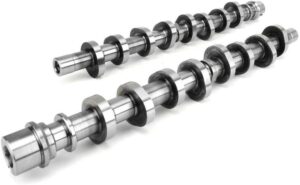 | COMP Cams 102500 | 1999–2004 | Check Price |
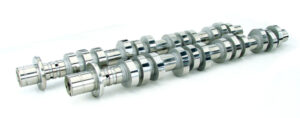 | COMP Cams 127050 | 2005–2010 | Check Price |
 | DNJ CAM4173L | 2005–2010 | Check Price |
 | COMP Cams 127020 | 2005–2010 | Check Price |
 | COMP Cams 102200 | 1996–2004 | Check Price |
 | COMP Cams 127300 | 2005–2010 | Check Price |
DNJ CAM4173R (Editor’s Choice)
The CAM4173R is a right-bank replacement camshaft for the three-valve 4.6L Mustang GT. It is specified for the 2005–2010 Mustang, and the part is intended to restore original-style valve operation rather than add an aggressive performance grind. On a US left-hand-drive car, the right bank is the passenger side.
DNJ specifies cast-iron construction for this camshaft range, with heat treatment and machining of the working surfaces. The practical attraction is a focused repair: when the right cam is damaged and the rest of the engine is sound, a correctly matched replacement avoids turning the job into a complete performance conversion.
This is one camshaft, not a matched two-cam upgrade set. Its appeal is restoring the intended operation of the appropriate bank, so it should not be bought for a new exhaust note or a promised power increase. Observe the specified production-date condition from August 8, 2005, and inspect the followers, journals and oiling before fitting a replacement.
Pros
- Bank-specific right-side replacement for the three-valve engine.
- Manufacturer lists the 4.6L Mustang application.
- OE-style repair without choosing a more aggressive grind.
Cons
- Only the right-bank camshaft; the left side is a separate part.
- A repair part rather than a performance-profile upgrade.
COMP Cams 102600
The 102600 XE270AH is the more assertive PI-head two-valve choice in this group. COMP specifies 234/238 degrees of duration at 0.050-inch lift, 0.550-inch valve lift on both sides and a 113-degree lobe-separation angle. Its intended character is a noticeable idle and stronger hot-street performance than a mild replacement profile.
The published operating range is 1,800–5,800 rpm. That makes it a better fit for an engine whose intake, exhaust, gearing and calibration have been chosen to use the extra duration. Compared with the milder 102500 below, it asks more of the surrounding combination and places less emphasis on an uncomplicated stock-style installation.
COMP calls for upgraded springs and retainers, the specified cam-gear set and custom tuning. A higher numerical axle ratio and an appropriate higher-stall converter can also help the automatic-transmission combination reach the cam’s useful powerband more readily.
Pros
- 234/238-degree hot-street profile for PI-head two-valve engines.
- 0.550-inch intake and exhaust lift.
- Noticeable idle and a defined 1,800–5,800 rpm operating range.
Cons
- Requires supporting valvetrain parts and custom tuning.
- More demanding of gearing and converter choice than the 102500.
COMP Cams 102500
The 102500 XE262AH is the milder PI-head alternative to the 102600. Its 226/230-degree duration at 0.050-inch lift keeps the emphasis on low- and midrange use, while retaining 0.550-inch intake and exhaust lift and a 113-degree lobe-separation angle. It is a useful starting point for a street-driven two-valve GT whose owner wants more than a stock-style replacement.
COMP’s 1,400–5,400 rpm operating range puts the focus lower in the rev band than the 102600. That is appealing when the car spends more time on ordinary roads than near its upper engine-speed range. The shorter duration is the important comparison; it is not simply a lower-lift version of the hotter cam.
The milder profile still requires the correct aftermarket springs, retainers and cam gears. COMP says it can work with the stock computer but recommends custom tuning for the best match. It therefore reduces the emphasis on an aggressive combination without removing the need to plan the supporting hardware.
Pros
- Shorter duration than the 102600 for a more street-focused PI-head build.
- Published 1,400–5,400 rpm operating range.
- 0.550-inch lift with a 113-degree lobe separation.
Cons
- Upgraded springs and retainers are still required.
- The stock computer does not remove the benefit of a properly matched calibration.
COMP Cams 127050
The 127050 XFI NSR is the restrained performance option for the three-valve GT. COMP specifies 214/227 degrees of duration at 0.050-inch lift and a 114-degree lobe separation. The NSR design is compatible with the appropriate stock valve springs, which gives it a different installation scope from the VSR 127300.
The design is aimed at an otherwise fairly standard engine, with more emphasis on the upper part of the rev range than an OE-style replacement cam. Its roughly 0.450-inch lift keeps it within the stock-spring approach. For a street car, the attraction is adding a performance profile without automatically committing to a spring upgrade.
NSR means no valve-spring upgrade is required for the intended configuration; it does not mean worn springs, followers or timing components can be ignored. COMP describes the cam as usable without computer re-tuning, but any other engine changes still need to be considered together. This is a more moderate choice than the rough-idling Mutha’ Thumpr below.
Pros
- NSR design works with the appropriate stock valve springs.
- 214/227-degree profile for the three-valve engine.
- A more moderate alternative to the 127020 Mutha’ Thumpr.
Cons
- Existing spring and timing-system condition still matter.
- Less aggressive idle character than a sound-focused Thumpr profile.
DNJ CAM4173L
The CAM4173L is the left-bank counterpart to the right-side DNJ above. It is specified for the 2005–2010 three-valve 4.6L Mustang. On a US left-hand-drive Mustang, this is the driver-side camshaft; left and right are not interchangeable.
Like the CAM4173R, it is intended for an OE-style repair rather than a change in camshaft character. A single-bank replacement can make sense after diagnosis identifies a damaged cam, provided the remaining valvetrain and the cause of the wear are addressed. There is no reason to expect a different idle or higher peak power merely because the replacement part is new.
The benefit is being able to choose the bank that actually needs attention. The limitation is that it supplies only the camshaft for that side, rather than the timing system or a complete performance pair. Apply the same production-date requirement and inspection of followers, journals and lubrication as for the right-bank part.
Pros
- Dedicated left-bank replacement for the three-valve Mustang application.
- OE-style valve-operation restoration.
- Sold as the individual cam for a bank-specific repair.
Cons
- Not interchangeable with the right-bank CAM4173R.
- Does not include a complete timing or valvetrain overhaul.
COMP Cams 127020
The 127020 Mutha’ Thumpr is the choice for a three-valve build where a very rough idle is part of the appeal. Its 234/254-degree duration at 0.050-inch lift and 109-degree lobe separation give it a substantially more aggressive character than the 127050. This is a sound-and-performance profile, not a subtle replacement cam.
COMP specifies 0.450-inch intake and exhaust lift and compatibility with the intended stock valve springs. That NSR approach keeps a spring change from being an automatic requirement, but the large duration still shifts the combination toward higher-rpm use. The manufacturer describes the strongest gains above 4,900 rpm, so the supporting intake, exhaust and gearing should suit that emphasis.
The important extra work is the cam-phaser limiter arrangement and custom tuning. COMP’s application table calls for limiter kit 5449 for this profile, and a suitable converter and axle gearing can help the complete build. Choose it for the deliberate rough idle and upper-range character, with the extra setup accepted as part of the decision.
Pros
- Very pronounced Thumpr idle character.
- NSR lift profile compatible with the intended stock springs.
- Distinct higher-rpm emphasis for a three-valve build.
Cons
- Cam-phaser limiter upgrade and custom tuning required.
- A rougher, more demanding choice than a mild street profile.
COMP Cams 102200
The 102200 XE268H is a two-valve Xtreme Energy profile with 230/236 degrees of duration at 0.050-inch lift and a 114-degree lobe separation. Its 0.500-inch intake and exhaust lift distinguishes it from the 0.550-inch PI-head 102500 and 102600 choices. It belongs in a matched two-valve build, not a three-valve or four-valve engine.
COMP gives it a 1,600–5,600 rpm operating range and describes it as a mild street-performance profile with a noticeable idle. That makes it worth considering when the goal is a usable street powerband and a change in character, rather than the most aggressive cam in the range. The head configuration and supporting parts still determine which of the two-valve profiles is the better match.
The installation requires the specified springs, retainers and cam-gear set, along with custom tuning. The calibration lets the fuel-injected two-valve engine make proper use of the changed valve events. Compare the duration, lift and intended operating range with the rest of the actual engine combination before choosing it.
Pros
- Defined 1,600–5,600 rpm street operating range.
- 0.500-inch lift distinguishes it from the PI-specific alternatives.
- Noticeable idle without choosing the most aggressive profile here.
Cons
- Supporting springs, retainers, gears and custom tuning are required.
- Cylinder-head configuration must be considered before choosing the profile.
COMP Cams 127300
The 127300 XFI VSR is the three-valve choice for an owner willing to upgrade the springs for a more serious street profile. The grind uses 222/235 degrees of duration at 0.050-inch lift and a 115.5-degree lobe separation. Its roughly 0.490/0.480-inch valve lift separates it from the lower-lift NSR options.
COMP describes a noticeable idle and stronger performance above 4,600 rpm. That points toward a build that can spend useful time in the upper part of the rev range, rather than a stock-style repair. Compared with the 127050, the attraction is the more assertive profile; the price of that choice is a larger supporting-parts commitment.
VSR explicitly means valve springs are required. Correct retainers, clearances and calibration need to be part of the installation, and the manufacturer recommends gearing and converter selection to suit the cam. It is a purposeful choice for a planned combination, rather than the simplest way to freshen a standard GT.
Pros
- More assertive three-valve profile than the 127050 NSR.
- 222/235-degree duration with a 115.5-degree lobe separation.
- A defined upper-rpm street-performance emphasis.
Cons
- Valve-spring upgrade required.
- Gearing, converter choice and calibration need to suit the profile.
How to Pick the Best Cam for a 4.6 Mustang
These eight choices cover two-valve Mustang GT applications from 1996–2004 and three-valve GT applications from 2005–2010, with the specific requirements in each review. They are not four-valve Cobra or Mach 1 cams. The DNJ CAM4173R is the lead pick for an OE-style right-bank repair on a supported three-valve engine; the COMP sets offer different balances of street manners, idle character and higher-rpm performance.
For the separate exhaust question in a Mustang GT project, see Exhaust for Mustang GT (2015, 2016, 2017 Models) and check the exact model year and engine.
Identify the Engine and Cylinder Heads First
The 4.6L Modular engine family includes two-, three- and four-valve configurations. The 1996–2004 Mustang GT uses two-valve heads, while the 2005–2010 GT uses three-valve heads. A four-valve Cobra or Mach 1 needs a different selection. Within the two-valve family, distinguish PI heads from the earlier configuration, including any cylinder-head swap already carried out on the car.
Separate a Repair from a Performance Change
The DNJ parts are individual right- and left-bank replacements. The COMP products reviewed here are matched performance cam sets with different lift, duration and supporting-parts requirements. A new OE-style cam is intended to restore normal operation; a performance grind changes the balance of idle, torque delivery and useful engine speed. Neither is automatically the right answer for every car.
Understand Lift, Duration and Operating Range
Valve lift is how far the valve opens. Duration describes how long it remains open, measured in crankshaft degrees. Compare duration figures at the same checking lift, such as 0.050 inch, instead of mixing advertised duration with a different measurement. A cam’s operating range is guidance for matching the complete combination, not a new safe rev limit for an otherwise standard engine.
Budget for the Correct Valvetrain Parts
NSR, VSR and phaser requirements are different things. The 127050 is designed around stock springs; the 127300 requires a spring upgrade; the 127020 also needs its specified phaser-limiter setup and tuning. The two-valve COMP choices require their recommended springs, retainers and cam gears. Check piston-to-valve clearance, spring clearance and the manufacturer’s timing instructions during installation.
Choose Around Gearing, Transmission and Street Use
A larger-duration cam can move the useful powerband higher and change idle quality. That can be enjoyable in a matched performance build and less appealing in a car used mainly at low engine speed. A higher numerical axle ratio and the appropriate torque-converter stall speed may help the combination. Match those drivetrain choices to the cam’s recommended operating range.
When Does a Camshaft Actually Need Replacement?
A damaged lobe, journal wear or a diagnosed lubrication problem can justify a repair, but sluggish running, a warning light or a no-start condition do not identify a bad camshaft on their own. Timing faults, sensors, ignition and fuel-system problems can produce similar symptoms. Diagnose the cause before buying parts, and address oiling or follower damage so the replacement does not face the same problem.
Cam timing and clearance checks are precise work. For a single-bank repair, use the correct side and original-type profile; for a performance conversion, use the matched set and its specified supporting components. Correct timing matters more than a promise of an easy installation.
Wrap-Up: The Best Cam for a 4.6 Mustang
The DNJ CAM4173R remains the lead repair choice for the specified right bank of a three-valve Mustang, with the CAM4173L covering the other side. For a performance change, the 102500 offers a milder PI-head two-valve approach than the 102600, while the 127050 is the more moderate stock-spring three-valve option. The Mutha’ Thumpr and VSR alternatives suit a driver who wants their particular idle and higher-rpm character and is prepared to build around them.
Use the table to narrow the engine-year group, then compare the full profile and supporting-parts requirements. The most rewarding cam is the one that works with the actual heads, transmission and driving routine.