Looking for the best cam for a Pontiac 400? A good street cam should make the engine enjoyable where you actually drive it. The right choice brings the power band, idle character, and drivetrain into balance, rather than simply adding the roughest idle possible.
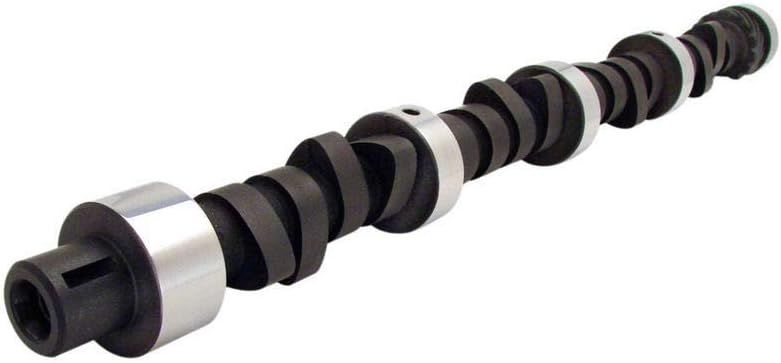
These seven Pontiac-specific cams cover mild cruising combinations through to more ambitious street/strip builds. The differences are in the details: duration, lift, power range, and the character each profile is designed to deliver.
As an Amazon Associate, we earn from qualifying purchases.
Best Cams for Pontiac 400 – Comparison Table
1. COMP Cams CL51-221-4 – Xtreme Energy XE256H (Editor’s Choice)
The XE256H has the right priorities for a Pontiac 400 that actually gets driven: low- and midrange torque, a manageable idle, and a useful power band without a race-cam emphasis. Its listed 1,000–5,200 rpm range makes it a persuasive choice for a road car that needs to feel willing in everyday driving.
The profile uses 212 degrees of intake duration and 218 degrees of exhaust duration at 0.050-inch lift. That extra exhaust duration distinguishes it from the equal-duration High Energy 260H below. Valve lift is 0.447/0.455 inch, so the specifications remain relatively restrained compared with the larger XE262H and Magnum 270H.
Its strength is balance. Choose it for a torque-focused street build, rather than expecting the high-rpm emphasis of a larger profile. The CL51-221-4 includes the cam and hydraulic flat-tappet lifters; springs and timing components are separate.
Features
- 212° / 218° duration at 0.050-inch lift (intake / exhaust)
- 0.447 / 0.455 in listed valve lift (intake / exhaust)
- 1,000–5,200 rpm operating range
Pros
- Low- and midrange torque emphasis suits road use
- A good-idle profile without a race-focused power band
- Cam and lifters included
Cons
- Not aimed at sustained high-rpm performance
- A mild choice if a pronounced idle is the main goal
2. COMP Cams 51-232-3 – High Energy 268H
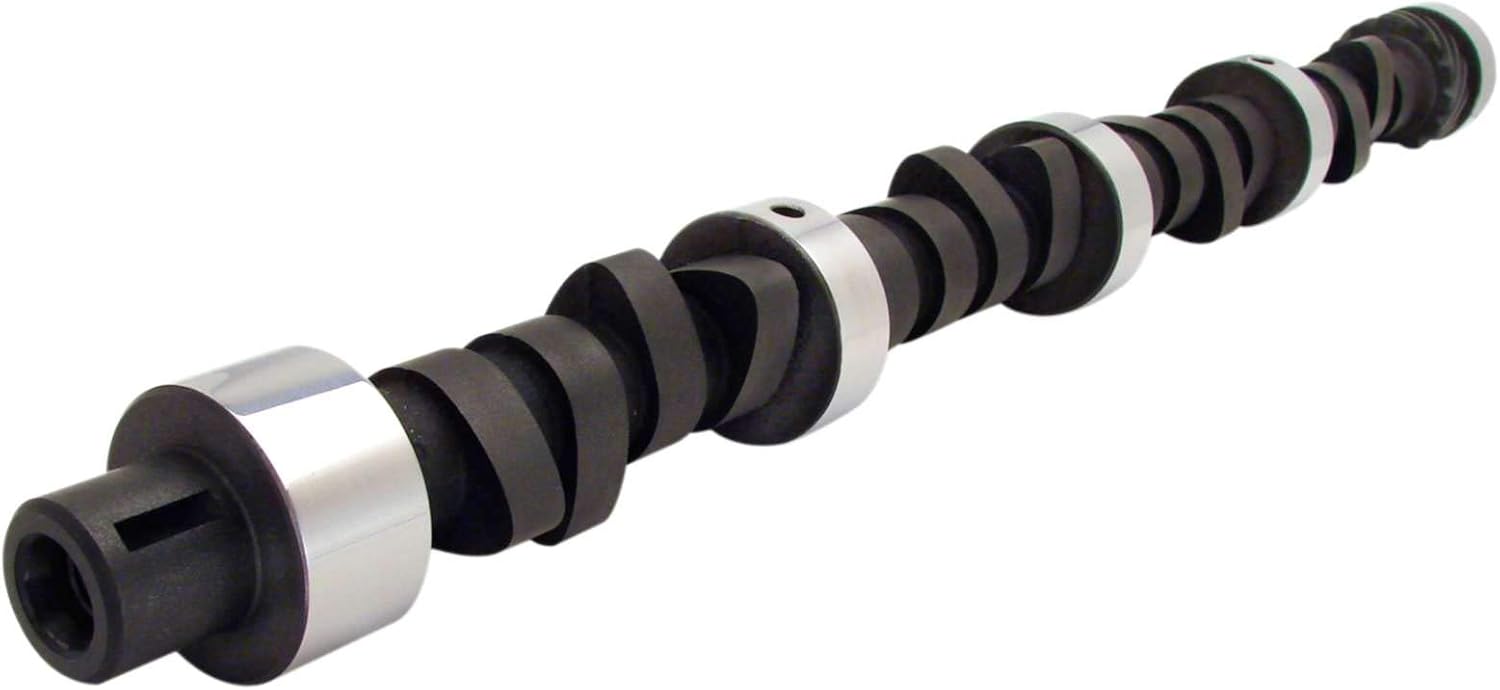
The High Energy 268H gives this comparison a more assertive street option. COMP describes a noticeable idle alongside low-end and midrange torque, so its appeal goes beyond making the engine sound busy at a standstill. It is a profile for owners who want some character while keeping the focus on road performance.
With 218/218 degrees of duration at 0.050 inch and 0.454-inch lift on both valves, it sits between the smaller High Energy 260H and the Magnum 270H. Its listed 1,500–5,500 rpm range also moves the emphasis higher than the mild 252H. That makes the 268H a more natural candidate for a performance-minded build than a quiet, near-stock restoration.
The compromise is the idle itself: noticeable is welcome in a weekend car, less so when near-stock manners are the priority. The 51-232-3 is supplied as a bare camshaft, so compatible new hydraulic flat-tappet lifters are needed.
Features
- 218° / 218° duration at 0.050-inch lift (intake / exhaust)
- 0.454 / 0.454 in listed valve lift (intake / exhaust)
- 1,500–5,500 rpm operating range
Pros
- Combines a noticeable idle with a street-torque focus
- A middle step between the 260H and Magnum 270H
- Noticeable idle for a weekend-car character
Cons
- Less suited to a near-stock idle goal
- Lifters must be purchased separately
3. COMP Cams CL51-233-4 – Magnum 270H
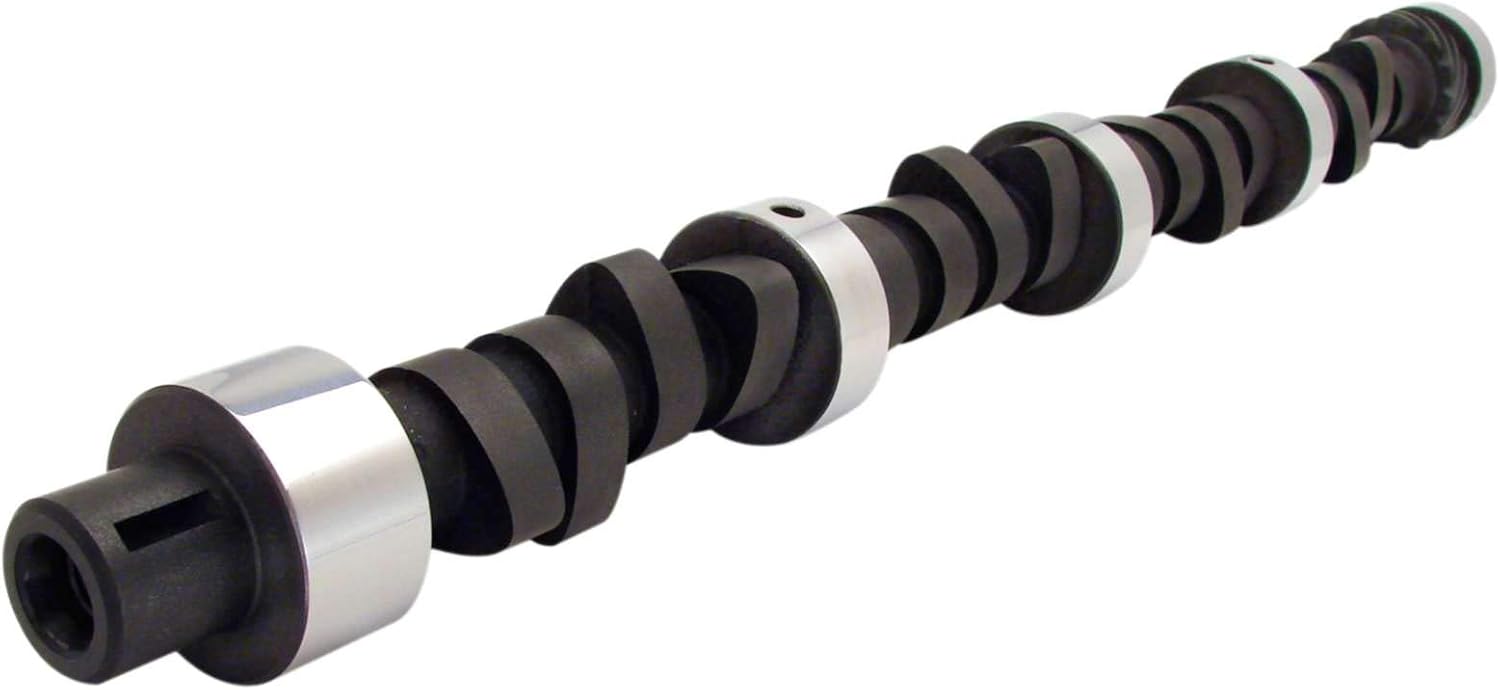
The Magnum 270H is the most performance-oriented profile in this group. Its 224/224-degree duration and 0.476-inch valve lift are the largest here, and the listed operating band reaches 5,800 rpm. It is the interesting choice when the Pontiac 400 is being built around stronger midrange performance rather than the mildest possible road manners.
Compared with the High Energy 268H, the 270H adds six degrees of duration at 0.050 inch and moves the listed range from 1,500–5,500 to 1,800–5,800 rpm. That difference is a reason to look closely at compression and gearing, not a promise of a particular horsepower gain. COMP describes its idle as fair rather than smooth.
The attraction is a more ambitious street/strip profile with lifters included. The trade-off is that its character makes less sense in a build centered on low-speed ease. Supporting parts should suit that higher operating range.
Features
- 224° / 224° duration at 0.050-inch lift (intake / exhaust)
- 0.476 / 0.476 in listed valve lift (intake / exhaust)
- 1,800–5,800 rpm operating range
Pros
- Largest duration and lift in this selection
- Midrange emphasis for a planned street/strip build
- Cam-and-lifter kit
Cons
- Least conservative choice for low-speed road manners
- Fair idle rather than a smooth-idle emphasis
4. COMP Cams 51-229-3 – High Energy 252H
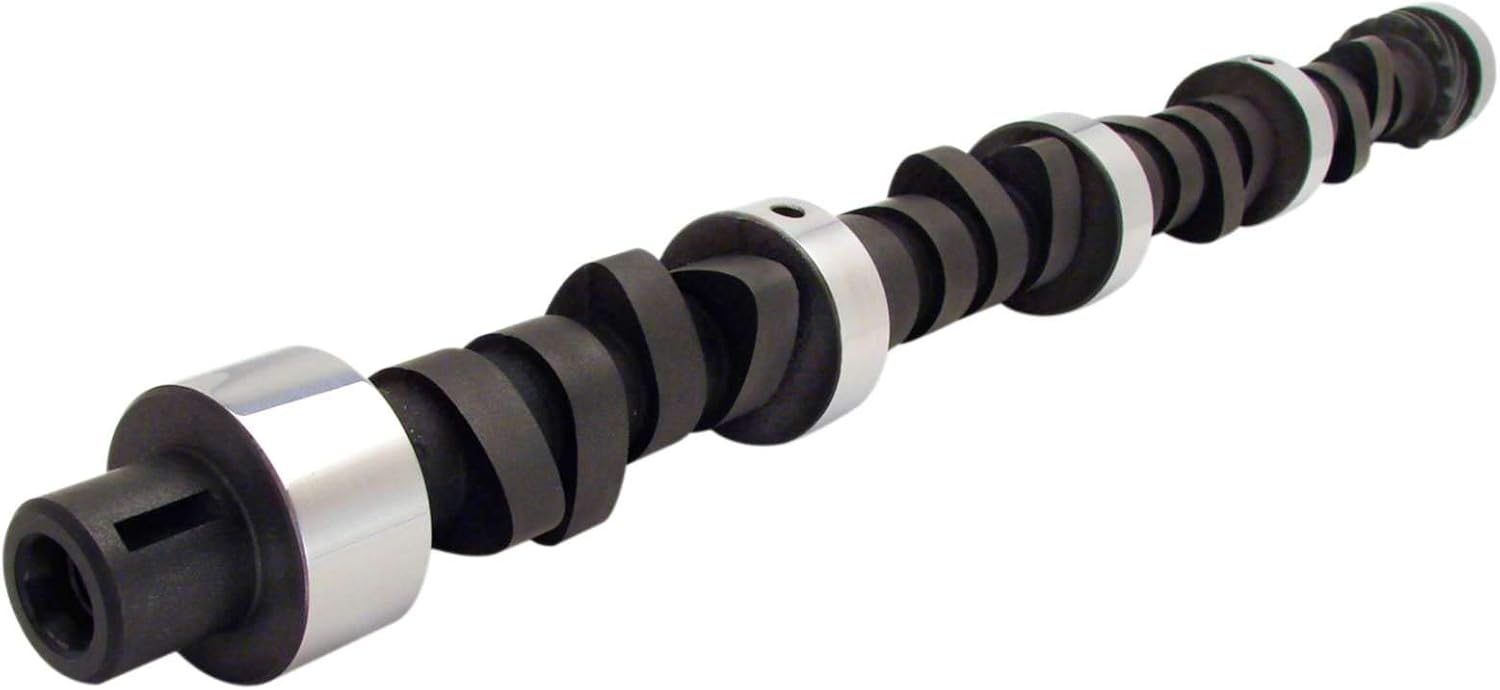
The High Energy 252H is the understated choice here. It favors a smooth idle and torque at ordinary road speeds over a dramatic exhaust note or a high-rpm target. For a Pontiac 400 that spends more time cruising than chasing the rev counter, that is a useful set of priorities.
Its 206/206-degree duration at 0.050 inch is the smallest equal-duration profile in this guide. Valve lift is 0.425 inch on both valves, and the listed operating range is 800–4,800 rpm. COMP specifically includes 326–400 engines in its smooth-idle, torque-oriented application notes, rather than describing it only in broad racing terms.
The limitation follows from the same mild specification: it is less compelling when the build is meant to work hard higher in the rev range. Choose the 252H for its restrained character, not for a lumpy idle. The 51-229-3 is a camshaft-only part and needs compatible new hydraulic flat-tappet lifters.
Features
- 206° / 206° duration at 0.050-inch lift (intake / exhaust)
- 0.425 / 0.425 in listed valve lift (intake / exhaust)
- 800–4,800 rpm operating range
Pros
- Smooth-idle, low-speed torque emphasis
- Torque-focused 800–4,800 rpm operating range
Cons
- Not aimed at a high-rpm performance build
- Unlikely to satisfy a pronounced-idle goal
5. COMP Cams CL51-220-4 – Xtreme Energy XE250H
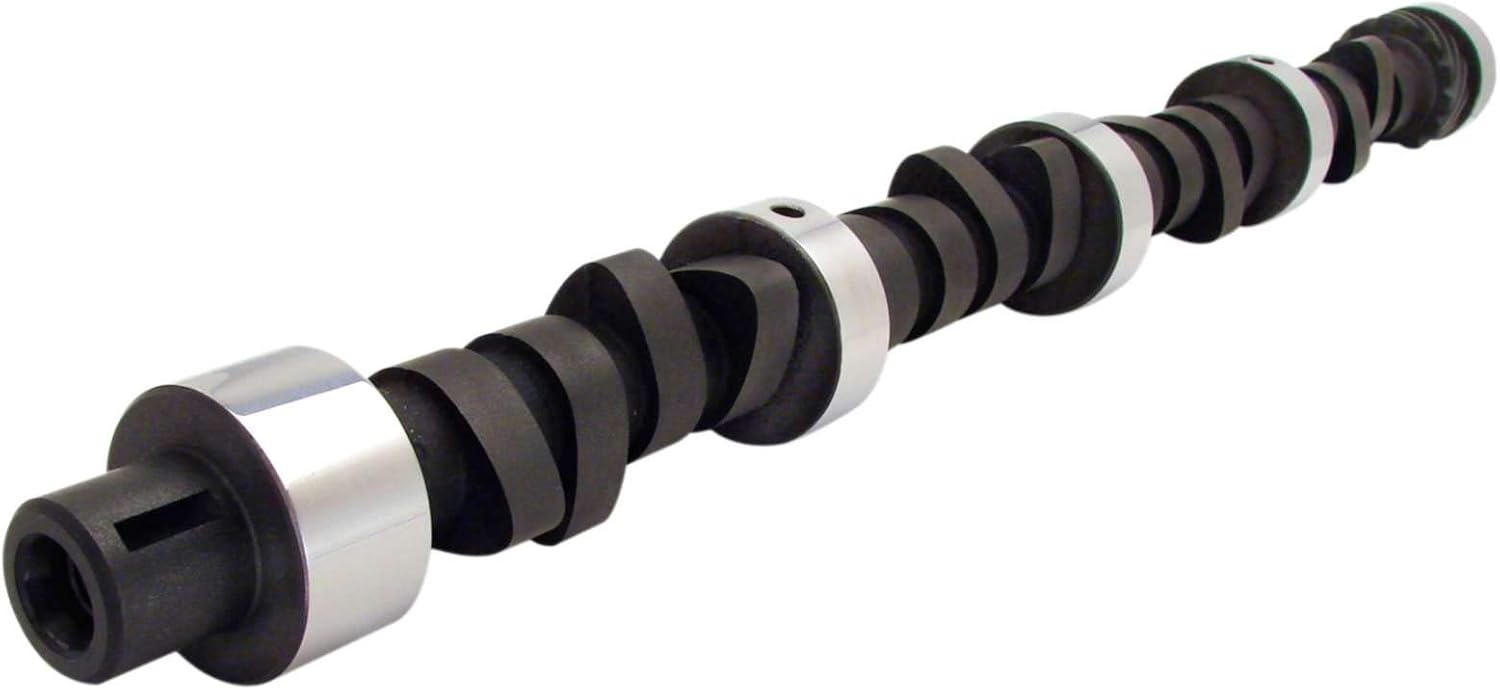
The XE250H is another strong candidate for a road-focused Pontiac 400, with a slightly different recipe from the High Energy 252H. Both keep intake duration at 206 degrees at 0.050 inch, but the XE250H gives the exhaust side six more degrees. Its lift is also higher, at 0.432 inch on the intake and 0.444 inch on the exhaust.
COMP describes the profile as a strong-torque, smooth-idle design and lists a 600–4,800 rpm operating range. The attraction is that low-speed emphasis, especially when easy road manners matter more than extending the rev range. The extra exhaust duration is a concrete specification to compare with the 252H, not evidence of an automatic power advantage on every engine.
This is still a small street cam, so it is less attractive for a build aimed at the upper rev range. The CL51-220-4 includes hydraulic flat-tappet lifters, which makes it a practical comparison with the cam-only 252H.
Features
- 206° / 212° duration at 0.050-inch lift (intake / exhaust)
- 0.432 / 0.444 in listed valve lift (intake / exhaust)
- 600–4,800 rpm operating range
Pros
- Smooth-idle profile with a low-speed torque focus
- More exhaust duration and lift than the High Energy 252H
- Lifters included
Cons
- Limited appeal for a high-rpm street/strip build
6. COMP Cams 51-230-3 – High Energy 260H
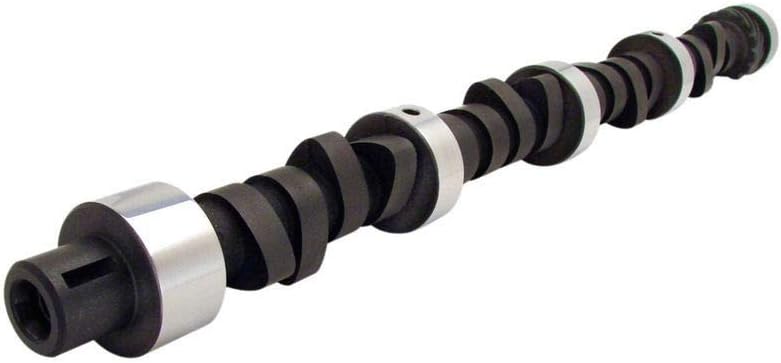
The High Energy 260H occupies a useful middle position among the milder cams here. Its 212/212-degree duration at 0.050-inch lift gives it more duration than the 252H without stepping up to the 268H. The listed 1,200–5,200 rpm range keeps the emphasis on street performance.
It is particularly worth comparing with the XE256H. Both have 212 degrees of intake duration, but the 260H matches that figure on the exhaust and uses 0.440-inch lift on both valves. The XE256H has more exhaust duration and more lift. These are different profiles despite the shared intake number; which works better depends on the heads and the rest of the engine.
The 260H is appealing when a moderate High Energy profile fits the plan and a larger cam would be a needless escalation. It does not have the upper-rpm reach of the Magnum 270H, and its cam-only format means new lifters are a separate purchase.
Features
- 212° / 212° duration at 0.050-inch lift (intake / exhaust)
- 0.440 / 0.440 in listed valve lift (intake / exhaust)
- 1,200–5,200 rpm operating range
Pros
- Moderate duration for a street-focused build
- Extends the listed operating range to 5,200 rpm
Cons
- Less upper-rpm emphasis than the Magnum 270H
- Cam-only format requires separate lifters
7. COMP Cams CL51-222-4 – Xtreme Energy XE262H
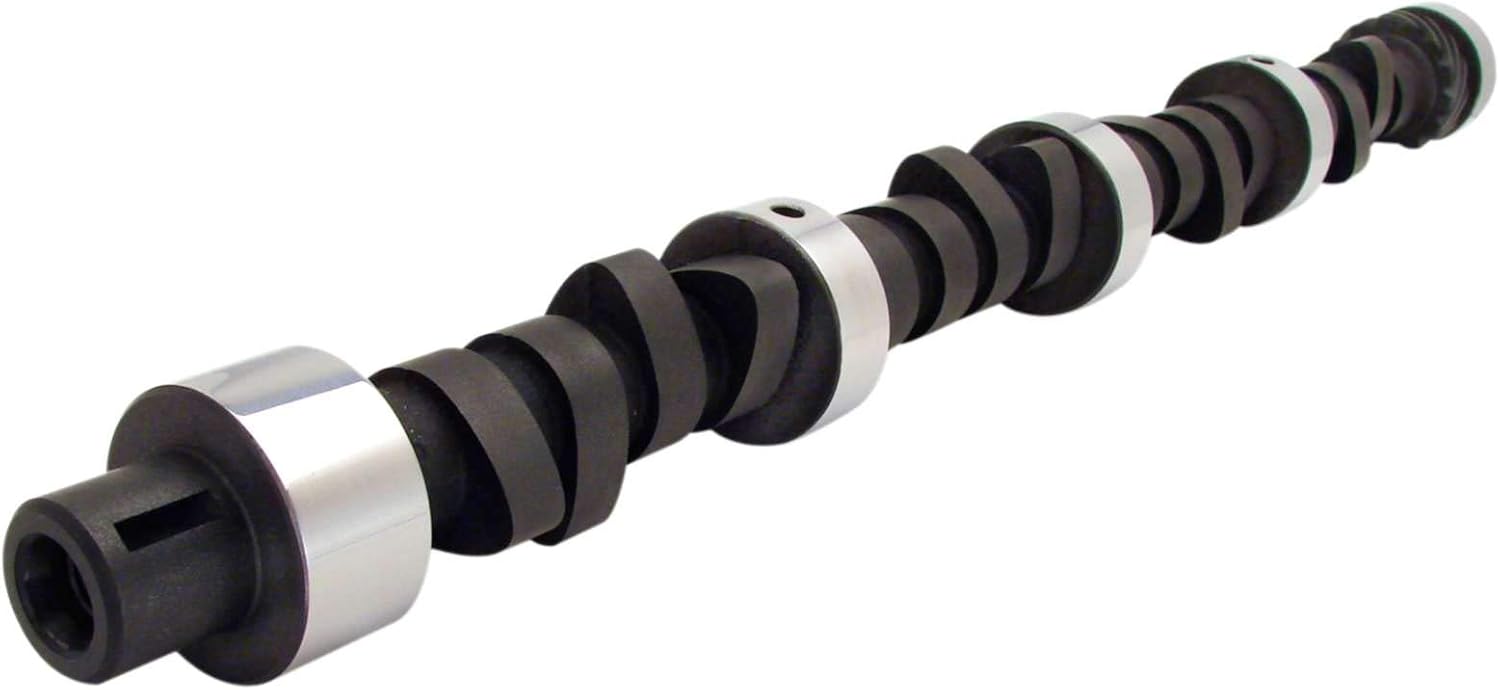
The XE262H is the next step up from the XE256H for a Pontiac 400 with a more performance-focused street build. Duration rises from 212/218 to 218/224 degrees at 0.050 inch, while lift increases to 0.462/0.470 inch. It also has six more degrees of exhaust duration than the High Energy 268H, despite sharing the same intake duration.
Its listed 1,300–5,500 rpm band stays within a street-oriented range. COMP's application guidance mentions mild gearing and a stock or 1,800-rpm-stall converter. That is useful context: the XE262H is not presented as a race-only profile that automatically demands an extreme drivetrain.
The appeal is a larger dual-pattern cam with lifters included. The compromise is that it moves away from the smooth-idle emphasis of the small 252H and XE250H. Compression, gearing, and converter choice deserve more attention before favoring it over the smaller profiles.
Features
- 218° / 224° duration at 0.050-inch lift (intake / exhaust)
- 0.462 / 0.470 in listed valve lift (intake / exhaust)
- 1,300–5,500 rpm operating range
Pros
- More duration and lift than the XE256H
- Manufacturer guidance includes mild gearing
- Cam and lifters supplied together
Cons
- Less conservative than the small smooth-idle profiles
- Higher lift calls for attention to spring travel and clearances
How to Pick the Best Cam for a Pontiac 400?
Start with how the car is used. A Pontiac 400 that cruises through town and spends much of its life at moderate engine speeds benefits from a different emphasis than a street/strip car built to pull harder toward the top of the rev range. Choose the camshaft around that job.
Duration helps explain the differences in this guide. At 0.050-inch lift, the High Energy 252H is a mild 206/206-degree profile, while the Magnum 270H reaches 224/224 degrees. In broad terms, increasing duration tends to move the useful power band upward and can make the idle less settled. The whole profile matters, though: intake and exhaust timing, lift, and the rest of the engine all contribute.
The listed rpm ranges are a guide to the intended character, not measured power curves for your particular engine. Compare them with compression, head flow, exhaust, converter or clutch, rear gearing, and vehicle weight. For a street car, idle quality and vacuum for accessories deserve a place in that decision too.
All seven models here are hydraulic flat-tappet cams for the traditional Pontiac V8 family. Check springs, installed height, rocker ratio, and piston-to-valve clearance before installation. Use compatible new lifters and follow the manufacturer’s break-in instructions. A CL kit includes the cam and lifters; it is not a complete set of springs, timing parts, and installation hardware.
Working on a different engine? The guides to a 4.8 Silverado cam and a stock 454 cam cover those separate applications.
Road Racing
A cam needs to work from corner exit to the next braking point. A broad power band can be more useful than a higher peak that leaves the engine below its preferred range after a gear change. Match the profile to gearing and the rpm the car actually uses on the circuit. The separate 383 stroker cam guide covers a different engine family.
Drag Racing
The cam, converter, rear gearing, and intended shift points need to work together. A larger profile becomes more interesting when the car can launch and stay in its useful range; it can be a poor trade when the drivetrain keeps pulling the engine below it. None of the profiles here should be chosen on idle sound alone.
Stock Car Racing
Start with the class rules, then consider track length, gearing, and the engine speed coming off the slowest corner. The cam that suits a short, tight circuit may not be the right choice for a faster track. A street-oriented recommendation is not automatically a suitable race specification.
Wrap-Up: The Best Cam for a Pontiac 400
For a balanced street build, the XE256H is the most persuasive starting point in this group: its design combines low- and midrange torque with a good idle. The 252H and XE250H put a stronger emphasis on mild road manners, while the 260H provides another moderate street option.
The 268H adds a noticeable-idle street character. Move toward the XE262H or Magnum 270H when the engine and drivetrain justify a more ambitious profile. Choose the character that suits the car, then use the links above to check the exact part and current price.