
The best cam for a 4.8 Silverado depends on the truck’s job. The COMP 54-424-11 is the performance pick for a matched street build. For an OE-style repair, start with the correct engine code and the Melling MC1390 application.
Top 5 Best Cams for 4.8 Silverado
COMP Cams 54-424-11 (Editor’s Choice)
The COMP 54-424-11 offers an appealing middle ground for a performance-oriented 4.8 build. Its 212/218-degree duration at 0.050-inch tappet lift is less aggressive than the BTR Stage 3 and Stage 4 profiles here, while the relatively generous valve lift gives the cylinder heads useful opening without relying on extreme duration alone.
With 1.7:1 rocker arms, the specified valve lift is 0.558 inch on the intake and 0.563 inch on the exhaust, with a 115-degree lobe separation angle. The hydraulic-roller, three-bolt design belongs to COMP’s LS Gen III/IV range. That combination is the basis for its broad street-performance appeal; the actual result still depends on the heads, exhaust, compression and calibration.
The necessary supporting work is the main trade-off. COMP specifies upgraded springs rather than reusing stock springs, and a proper ECU tune should be part of the project. It is the overall pick for a matched performance combination, not an OE replacement that can be installed in every 4.8 truck without other changes.
Pros
- 212/218-degree duration balances this group’s performance options.
- 0.558/0.563-inch specified valve lift with 1.7:1 rockers.
- 115-degree lobe separation and hydraulic-roller design.
Cons
- Upgraded valve springs and a suitable tune are needed.
- Three-bolt configuration must suit the timing system.
Melling MC1390
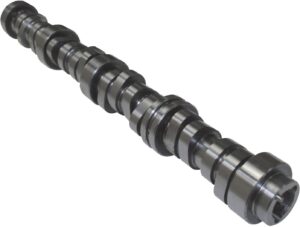
The Melling MC1390 serves a different purpose: restoring the correct factory-style camshaft arrangement rather than chasing a more aggressive power curve. It is a hydraulic-roller replacement cross-referenced to GM 12625437 for specified 4.8 applications. That makes it worth considering when the job is an engine repair and retaining the appropriate original configuration matters.
Melling’s application catalog identifies a single-bolt design for the relevant later 4.8 engines, including 2007–2009 Silverado 1500 VIN-code C applications and specified later VIN-code A/VVT configurations. The performance cams in this comparison use a three-bolt attachment. The engine code and timing hardware determine the fit; it is not a universal replacement across all 4.8 Silverado model years.
The appeal is avoiding an unnecessary performance conversion during a repair. The MC1390 is supplied as a camshaft; lifters and other service parts must be selected separately. It is the repair-oriented option for a confirmed application; earlier three-bolt engines and other timing arrangements need the correct part for their own specification.
Pros
- OE-style hydraulic-roller replacement for specified 4.8 applications.
- Cross-reference to GM 12625437.
- Retains the appropriate single-bolt configuration for the application.
Cons
- Application is engine-code and timing-system specific.
- Camshaft only; lifters and other repair parts are separate.
BTR Truck Stage 4 V2
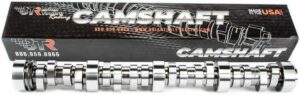
The BTR Truck Stage 4 V2 is the most aggressive of these performance choices. Its 224/230-degree duration at 0.050 inch and 109-degree lobe separation place it in a different category from a mild replacement cam. The attraction is a stronger emphasis on higher-rpm performance and a distinctly uneven idle in a properly matched build.
This exact V2 grind, BTR32430090, specifies 0.553-inch intake and exhaust valve lift. BTR describes it around a combination with appropriate gearing and a higher-stall converter, rather than an otherwise standard truck. That matters particularly with the smaller 4.8: the supporting drivetrain needs to help the engine reach the range where the larger profile is useful.
The compromise is everyday flexibility. A heavy truck expected to pull cleanly from low speed is not the obvious home for the largest cam here. Choose Stage 4 for a deliberate performance build with springs, clearance checks and tuning included in the plan. For a daily working truck, one of the milder COMP profiles is the more measured starting point.
Pros
- 224/230-degree duration for a committed performance build.
- 0.553/0.553-inch lift and 109-degree LSA.
- Three-bolt hydraulic-roller V2 design.
Cons
- Higher-stall converter and appropriate gearing are important.
- Less attractive for low-speed hauling and mild daily use.
BTR Truck Stage 3 V2 Cam Kit
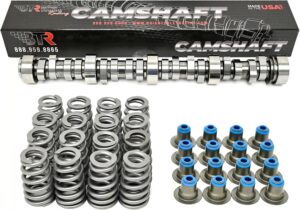
The BTR Truck Stage 3 V2 kit is a step between the milder COMP choices and Stage 4. The cam uses 218/224-degree duration at 0.050 inch, 0.553-inch lift on both valves and a 110-degree lobe separation angle. Those figures describe a purposeful performance profile with a noticeable idle, rather than a stock-sounding repair cam.
This kit combines the BTR31824100 camshaft with beehive springs and valve seals, so more of the valvetrain parts arrive together than with a bare cam. The cam uses a three-bolt attachment. BTR pairs the Stage 3 V2 profile with a higher-stall converter for the intended application, and the supporting tune is part of making the combination work properly.
The main compromise is low-speed response, which deserves particular attention in a tow vehicle. The kit is most appealing for an owner who wants a more assertive idle and stronger upper-range emphasis, and is prepared to build the surrounding engine and drivetrain accordingly.
Pros
- Camshaft, beehive springs and valve seals together.
- 218/224-degree duration with 0.553-inch lift.
- A less aggressive V2 option than Stage 4.
Cons
- Higher-stall converter is recommended for the intended combination.
- Low-speed response can be sacrificed for higher-rpm emphasis.
COMP Cams 54-450-11

The COMP 54-450-11 is the milder truck-focused grind in this selection. Its 206/212-degree duration at 0.050 inch is shorter than the 54-424-11, making it a more conservative starting point when the truck’s working character matters more than an aggressive idle. COMP specifically developed this profile for 4.8- and 5.3-litre Chevrolet/GMC truck applications.
The specification pairs 0.513/0.520-inch valve lift with a 115-degree lobe separation angle. It uses a three-bolt hydraulic-roller layout, and COMP recommends complementary calibration to get the intended result. Compared with the larger BTR profiles, its shorter duration is the feature that should guide the decision, rather than chasing the biggest lift or longest advertised operating range.
It remains a camshaft project rather than a simple maintenance swap. The manufacturer calls for suitable replacement springs, and the timing arrangement, pushrod length and clearances need to be correct. For a moderate build that should remain useful on the street, its restrained specification is the main attraction.
Pros
- Truck-focused profile for the 4.8/5.3 LS family.
- Relatively short 206/212-degree duration.
- Moderate 0.513/0.520-inch specified valve lift.
Cons
- Requires suitable springs and calibration.
- Not a direct three-bolt replacement for every later VVT arrangement.
How to Pick the Best Cam for 4.8 Silverado
These five options cover different goals: the COMP 54-424-11 is the overall performance pick, the milder 54-450-11 has a truck-focused specification, and the BTR Stage 3 and Stage 4 V2 grinds suit more committed builds. The Melling MC1390 is an OE-style repair choice for specific later 4.8 engines. Engine code, cam attachment and VVT equipment matter as much as displacement.
Start with the Engine and Timing System
Identify the engine code, cam attachment, reluctor and any variable-valve-timing equipment before choosing a cam. A three-bolt performance cam is not automatically interchangeable with a single-bolt VVT cam. A conversion needs the appropriate timing parts and calibration; retaining the original arrangement requires a cam specified for it.
Understand Lift and Duration
Lift describes how far the valve opens; duration describes the crankshaft rotation over which it is open at a stated checking height. Compare duration at the same checking height: advertised duration cannot be compared directly with duration at 0.050-inch tappet lift. More duration can shift the useful range upward and change idle quality, with a cost to low-speed behaviour. Compare complete profiles rather than selecting the largest number.
Plan the Supporting Valvetrain
Spring load, installed height, coil-bind clearance, retainer-to-seal clearance, pushrod length and piston-to-valve clearance need to suit the combination. Do not assume a hydraulic-roller design makes those checks unnecessary. COMP specifies replacement springs for the two performance grinds here; a kit also needs to be installed and measured correctly.
Match the Truck’s Job
Vehicle weight, gearing, converter, intake, exhaust and ECU tuning determine whether a profile feels useful in service. Stage 3 and Stage 4 are performance choices with corresponding compromises. An aggressive idle may be enjoyable in a weekend truck, but it is not a substitute for the low-speed response needed for regular hauling.
Repair or Performance Upgrade?
An OE-style repair cam and a performance cam solve different problems. If replacing worn parts, identify the cause of the wear and inspect the related valvetrain. A larger cam does not repair an underlying oiling or mechanical issue. Choose the matching hydraulic-roller components and follow the manufacturer’s installation procedure.
Best Cam for 4.8 Silverado: Final Thoughts
The COMP 54-424-11 remains the overall performance recommendation for a suitably prepared street combination. The 54-450-11 is the milder truck-focused alternative, while the BTR Stage 3 and Stage 4 V2 profiles suit increasingly committed builds. The Melling MC1390 belongs on the shortlist for a confirmed OE-style repair application. Match the cam to the whole truck and its intended use, rather than choosing by idle sound alone.