What’s the best oil for 7.3 Powerstroke engines? Start with the correct diesel specification and viscosity for the truck’s operating conditions. The engine uses its oil for lubrication and to operate the HEUI injection system, so clean oil, the right level and timely filter changes matter as much as the brand on the bottle.
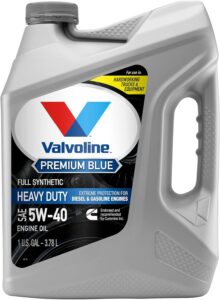
These four oils have Ford WSS-M2C171-F1 approval or compliance, with 5W-40, 10W-30 and 15W-40 options. Match the grade to the temperature and service guidance for the specific model year; a full-synthetic label does not make every viscosity suitable for every job.
The 4 Best Oils for 7.3 PowerStroke
Valvoline Premium Blue Extreme 5W-40 (Editor’s Choice)
Valvoline Premium Blue Extreme 5W-40 is the overall choice for owners who want a full-synthetic heavy-duty oil with useful cold-start performance and Ford diesel approval. Its 5W winter grade offers better low-temperature cranking and pumping characteristics than a 15W-40 grade, while both retain an SAE 40 operating-temperature classification. The practical appeal is easier oil circulation during cold starts without moving to a thinner hot-viscosity grade.
The formula targets soot handling, deposit control and oxidation resistance in demanding diesel service. It is listed by Ford as meeting WSS-M2C171-F1 and carries heavy-duty diesel API classifications. Those application credentials are more relevant to a Powerstroke owner than the familiar Cummins endorsement: approval for one engine maker is not a substitute for the specification required by another.
Its strongest use case is a truck that sees cold starts as well as sustained working temperatures. The lower winter grade helps at startup, while the heavy-duty formulation is designed to stay in grade as the oil heats and works. For consistently warm service, a suitable approved 15W-40 remains a practical alternative; the benefit of this 5W-40 is its broader cold-start flexibility, not a promise of extra horsepower.
Pros
- Ford-listed WSS-M2C171-F1 approval.
- Full-synthetic 5W-40 formulation with useful cold-start characteristics.
- Designed for soot, deposit and oxidation control in diesel service.
Cons
- Viscosity must still suit the truck’s operating conditions.
- Its cold-flow advantages may be unnecessary in consistently warm service.
Motorcraft Super Duty Diesel Motor Oil 10W-30
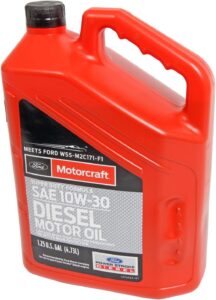
Motorcraft Super Duty Diesel 10W-30 is a direct, specification-focused option from Ford’s own parts brand. It is a diesel-engine oil, rather than a passenger-car 10W-30 selected only because the numbers match. The formulation meets WSS-M2C171-F1 and is specifically recommended by Motorcraft for the 7.3 Powerstroke within its stated temperature range.
The 10W winter grade and SAE 30 hot-viscosity grade give it a different role from the 5W-40 and 15W-40 alternatives. Motorcraft’s product guidance places this grade in the 0°F to 50°F range for the 7.3L diesel, making it an option for cooler conditions where that guidance fits the truck’s use. Its additive system addresses diesel soot, wear, deposits and foaming rather than relying on a generic gasoline-oil formulation.
The limitation is that it should not be treated as a universal year-round recommendation for a hard-working truck in hot weather. Use the exact model-year viscosity chart and towing guidance when the conditions change. It is a straightforward choice for owners who want to follow Ford’s own oil guidance for cooler operating conditions.
Pros
- Ford-branded diesel oil meeting WSS-M2C171-F1.
- Specific Motorcraft application guidance for the 7.3L Powerstroke.
- Formulated for diesel soot control, wear protection and foam control.
Cons
- 10W-30 is a cooler-weather choice, not a blanket grade for hot-weather heavy towing.
Shell Rotella T6 Full Synthetic 5W-40

Shell Rotella T6 5W-40 is another strong full-synthetic choice for a 7.3 Powerstroke when the grade suits the operating conditions. It combines an SAE 40 hot-viscosity grade with a 5W winter classification, giving it a useful role where cold starting makes a heavier winter grade less attractive. Ford lists this exact Rotella T6 5W-40 formulation under WSS-M2C171-F1.
Shell’s heavy-duty additive system focuses on controlling deposits, managing soot and resisting viscosity loss through shear. Those are practical strengths in a diesel where the engine oil also works in the injection system. Its API CK-4, CJ-4 and earlier diesel-category coverage is complemented by the Ford specification, rather than standing in for it.
T6 suits a working truck that needs the cold-flow advantages of 5W-40 without leaving the SAE 40 hot-viscosity class. Its low-ash chemistry also broadens its usefulness across newer diesel equipment, which can be convenient in a mixed fleet. For the older 7.3, the more relevant strengths are soot handling and viscosity retention. If the truck operates only in warmer conditions, an appropriate approved 15W-40 may already cover the job.
Pros
- Ford WSS-M2C171-F1-approved 5W-40 formulation.
- Full-synthetic oil with heavy-duty diesel classifications.
- Designed to control soot-related deposits and resist shear-related viscosity loss.
Cons
- 5W-40 must still match the truck’s temperature and load guidance.
Mobil Delvac Extreme 15W-40
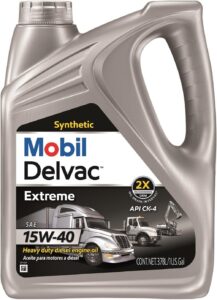
Mobil Delvac Extreme 15W-40 is the option here for owners whose conditions call for a 15W-40 heavy-duty oil. It combines a synthetic diesel formulation with an SAE 40 hot-viscosity grade and Ford WSS-M2C171-F1 approval. The focus is demanding working service rather than a passenger-car formulation with a similar brand name.
ExxonMobil designs Delvac Extreme for high-load on- and off-highway diesel use, emphasizing oxidation stability, deposit control and resistance to wear. The product also meets API CK-4 and earlier heavy-duty diesel categories. For a truck that spends its time working in suitable warmer conditions, that is a coherent specification package without needing to rely on extraordinary temperature-range claims.
The trade-off is cold-weather flexibility. A 15W winter grade is less attractive for very cold starts than a suitable 5W-40, even when both oils are synthetic. Delvac Extreme therefore makes the most sense for a truck whose temperature range and workload suit 15W-40: a substantial heavy-duty formulation for regular working use, with the colder-start alternatives available when the climate calls for them.
Pros
- Ford WSS-M2C171-F1 approval.
- Synthetic 15W-40 heavy-duty diesel formulation.
- Designed for high-load service, deposit control and oxidation resistance.
Cons
- 15W winter grade offers less cold-start flexibility than the 5W-40 options here.
How to Pick the Best Oil for 7.3 Powerstroke Engine
The HEUI system uses engine oil hydraulically to operate the injectors. That makes oil condition, aeration control and the correct level important to engine operation as well as lubrication. Choose a diesel-rated formulation and the viscosity specified for the operating conditions, then keep the oil and filter on the correct service schedule.
- Diesel specification: For modern replacement oils, follow Ford’s WSS-M2C171-F1 guidance and confirm the exact product. An API CF passenger-car oil is not interchangeable with the heavy-duty diesel categories in the 7.3 owner’s guide. API FA-4 is a different category and is not a substitute for these recommendations.
- Viscosity: Use the model-year temperature chart and load guidance. Motorcraft recommends its 10W-30 diesel oil for the 7.3L in the 0°F to 50°F range; warmer conditions and heavy towing can call for a different grade. A 5W-40 oil offers a lower winter classification than 15W-40 while retaining an SAE 40 hot-viscosity grade. Neither number is a direct statement of outdoor temperature limits.
- Oil and filter changes: Follow the normal or severe-service schedule for the truck, taking towing, idling, short journeys and dusty use into account. Change the filter with the oil. Adding oil to restore the level is not the same as an oil change, and a brand’s extended-drain claim does not automatically extend Ford’s interval.
- Level and condition: Check the level using the owner’s-guide procedure and avoid overfilling. Use a correctly rated oil and suitable filter rather than trying to repair a mechanical or injection problem with additives.
Valvoline Premium Blue Extreme 5W-40 is the overall pick for a suitable full-synthetic application, with Rotella T6 a similarly capable alternative. Motorcraft 10W-30 serves an appropriate cooler-weather role, while Mobil Delvac Extreme 15W-40 covers a suitable heavier winter-grade application. The best choice is the approved formulation and viscosity that fit the truck’s conditions, backed by consistent maintenance.