Looking for the best exhaust for a KLR650? Start with the model year, then decide whether a compact shape, a more restrained exhaust note or a serviceable performance muffler matters most.
For a Harley Softail Slim rather than a KLR650, use our separate guide to Exhaust for a Softail Slim; exhaust fitment is model-specific.

The KLR650 has been through several generations, and an exhaust for an earlier carbureted bike is not automatically suitable for a 2022-on fuel-injected model. The six options below cover specific earlier applications; the Years column refers to the versions reviewed here.
These are slip-on muffler options rather than complete header systems. They offer different materials, packing arrangements and noise-control features, so a shorter or louder muffler should not be treated as proof of extra horsepower. Match the exact application before comparing the details.
Best Exhausts for KLR650 — Comparison Table
| Image | Model | Years | Price |
|---|---|---|---|
| Delkevic Mini 8-inch (Editor's Choice) | 2008–2018 | Check Details |
 | FMF 042319 | 2008–2018 | Check Details |
 | Jardine RT4 | 1987–2012 | Check Details |
 | FMF 042320 (Best for Quieter Operation) | 1987–2007 | Check Details |
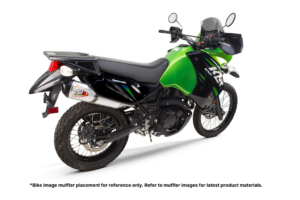 | Two Brothers Racing S1R | 2014–2018 | Check Details |
 | FMF 042318 | 1987–2007 | Check Details |
Delkevic Mini 8-inch (Editor’s Choice)
The Delkevic Mini is the compact styling choice for the second-generation KLR650E. Its eight-inch round muffler uses polished 304 stainless steel and leaves a much shorter visual outline than a full-length canister. For a rider who wants a tidy, bright exhaust rather than a large muffler dominating the rear of the bike, that is its clearest attraction.
The KIT02FC version includes the model-specific link pipe and a removable baffle accessed through the muffler inlet. The component-based design also makes the muffler, link pipe and baffle distinct parts rather than a single sealed assembly. It earns the overall pick here for that compact construction and straightforward slip-on approach on the appropriate KLR650E.
The important compromise is noise. Delkevic explicitly describes this short muffler as loud even with a quieter baffle, so it is not the choice for someone seeking a near-stock exhaust note. A spark arrestor is not included either. Choose it for its size and stainless finish, with a clear plan for sound and any required spark-arresting equipment.
Pros
- Compact eight-inch round body.
- Polished 304 stainless-steel construction.
- Model-specific link pipe and removable baffle.
Cons
- Loud even with a quieter baffle.
- Spark arrestor is not included.
FMF 042319
The PowerCore 4 042319 is FMF’s slip-on option for the 2008–2018 KLR650. Its aluminum muffler body and stainless-steel midpipe give it a practical mix of materials, while the champagne-colored anodized canister provides a more traditional off-road appearance than the polished Delkevic Mini.
The removable screen-type spark arrestor is the useful distinction for riders who need that equipment as part of the muffler. FMF also uses a stainless-steel end cap and replaceable packing, making it a serviceable design rather than an exhaust to fit and ignore. The relevant difference from the 042318 below is application: 042319 serves the later carbureted KLR, not the first-generation bike.
A quiet insert is an optional extra for this version. The included spark arrestor should not be confused with that separate noise-control part, and neither accessory establishes that the exhaust is road legal. It is a sound choice for the correct competition-use application when a conventional packed muffler and removable arrestor matter more than the shortest possible body.
Pros
- Aluminum body with stainless-steel midpipe and end cap.
- Removable screen spark arrestor included.
- Specific 2008–2018 KLR650 application.
Cons
- Quiet insert is sold separately.
- Packing requires maintenance; intended-use restrictions apply.
Jardine RT4
The Jardine RT4 offers a distinctly serviceable, modular approach for the earlier KLR650 application. Its aluminum muffler connects to stainless-steel tubing, while CNC-machined billet end caps give it a more substantial mechanical finish than a simple stamped outlet.
The rebuildable core is its main practical strength. Packing and internal components can be serviced instead of treating the canister as a sealed disposable part. Jardine’s design also uses TIG-welded construction and spring-mounted slip-fit joints, combining a removable assembly with the shaped tubing needed for the motorcycle.
That construction makes the RT4 interesting for an owner who values maintenance access and the traditional Jardine layout. It also means the packing, springs and joints deserve periodic attention. Quiet modules and spark-arresting components must match the relevant core and outlet; the presence of those accessories in the range is not a reason to assume every one is included with a particular system.
Pros
- Rebuildable muffler core.
- Aluminum muffler and stainless-steel tubing.
- Billet end caps and spring-mounted slip-fit construction.
Cons
- A packed, rebuildable muffler still needs servicing.
- Noise-control and spark-arresting accessories need the correct fit.
FMF 042320 (Best for Quieter Operation)
The Q4 042320 is the more noise-conscious FMF option for the first-generation KLR650. Its internal chambers, baffles and multistage packing are designed to control sound rather than pursuing the most open possible outlet. That makes it a better starting point than the Mini eight-inch muffler when noise management is a central priority.
The construction combines an aluminum body with a stainless-steel midpipe and end cap. FMF lists both a removable screen spark arrestor and a quiet insert as included for this exact version. Those details distinguish it from the PowerCore 4 042318, whose quiet insert is a separate purchase.
The Q4’s advantage is its sound-control design, not a guarantee of a particular noise reading on every bike. Packing condition and the complete engine setup still affect the result. It remains a model-specific muffler for the earlier generation, and a quieter exhaust does not by itself establish permission for road or trail use.
Pros
- Chambers, baffles and multistage packing prioritize sound control.
- Quiet insert and removable spark arrestor included.
- Aluminum and stainless-steel construction.
Cons
- Not the version for a 2008-on KLR650.
- Packing maintenance remains important to sound control.
Two Brothers Racing S1R
The S1R 005-4010406-S1 is the aluminum version for the 2014–2018 KLR650. It pairs a metal sleeve with the S1R’s shaped end cap and a dedicated slip tube, giving the bike a more compact performance-exhaust outline without replacing its original header.
Two Brothers specifies a Teflon-coated magnesium end cap, a CNC-machined aluminum outlet and a spiral-wound perforated core. The spring-fit inlet and rubber-lined mounting clamp are the useful mechanical details: the muffler attaches to its slip tube with springs, while the clamp supports the body at the motorcycle’s mounting point.
The appeal is that combination of a distinctive end-cap shape and a serviceable, packed muffler. The trade-off is upkeep: the packing and mounting hardware need periodic attention to keep the system in good condition. It also carries a closed-course competition brief, which matters if the motorcycle normally spends its time on public roads.
Pros
- Aluminum sleeve with a shaped magnesium end cap.
- Spring-fit slip tube and rubber-lined mounting clamp.
- Spiral-wound perforated core.
Cons
- Packing and mounting hardware need periodic attention.
- Competition-use system rather than an automatic road-legal upgrade.
FMF 042318
The PowerCore 4 042318 is the earlier-generation counterpart to the 042319. It keeps the same straightforward FMF idea—an aluminum canister, stainless-steel midpipe and a removable spark arrestor—but uses the application intended for the first-generation KLR650.
The champagne-anodized body gives it a familiar off-road look, and the stainless-steel end cap provides a durable outlet structure. Its included screen-type arrestor is removable for appropriate servicing. For an older bike whose original muffler is worn or damaged, this offers a conventional packed-muffler design with clearly identified supporting parts.
Compared with the Q4, the important distinction is the sound-control equipment: the 042318’s quiet insert is sold separately. Choose the Q4 if its included insert and chambered noise-control brief are the priority; choose this PowerCore when the simpler layout better suits the project. In either case, maintain the packing and follow the exact application and intended-use requirements.
Pros
- Dedicated first-generation KLR650 application.
- Aluminum body with stainless-steel midpipe and end cap.
- Removable spark arrestor included.
Cons
- Quiet insert costs extra.
- Less sound-control emphasis than the Q4 design.
How to Pick the Best Exhaust for a KLR650
Match the Generation and Exact Version
Identify the motorcycle before choosing the muffler. The FMF 042318 and 042320 in this guide serve the earlier KLR650, while 042319 is the 2008–2018 application. The reviewed Delkevic KIT02FC is the KLR650E version, and the aluminum S1R is listed for 2014–2018. These applications do not establish compatibility with a 2022-on fuel-injected KLR650.
Separate Noise Control from Spark Arresting
A baffle or quiet insert controls the exhaust note; a spark arrestor serves a different purpose. The Delkevic Mini does not include an arrestor. The FMF models include removable screen arrestors, but the PowerCore quiet inserts are separate accessories. Q4 uses a different sound-control brief with an included insert. None of those details alone establishes road legality or access to public land.
Consider the Whole Installation
A slip-on retains the header, but its link pipe, mounts, seals and clearance still need to fit the bike. Inspect worn mounting parts and follow the instructions for the exact exhaust. Carburetion requirements depend on the complete setup, particularly if the intake or other engine parts have also changed. Avoid assuming that one tuning recommendation covers every generation and modification.
Allow for Maintenance and Intended Use
Keep packed mufflers in good condition: exhausted packing can change noise and heat behavior. Check fasteners, springs and mounting clamps as required by the manufacturer. Several of these systems carry competition-use restrictions. Noise-control accessories do not automatically remove those restrictions.
When Is Replacement Worthwhile?
Damage, corrosion, leakage or a worn mounting arrangement may justify repair or replacement. If the original exhaust is sound, decide what an upgrade should actually achieve: a different shape, serviceability, lower mass or a preferred exhaust character. Compare the total installation and maintenance requirements rather than assuming a louder system is an improvement.
For another motorcycle, see the separate Ninja 300 exhaust guide. Its fitments are different from the KLR650’s.
Wrap-Up: The Best Exhaust for a KLR650
The Delkevic Mini remains the overall pick for an appropriate second-generation KLR650E when compact stainless construction is the main attraction. Its short body and removable baffle make a tidy package, but its loud character and lack of an included spark arrestor are important trade-offs.
For an earlier KLR650 with noise control higher on the list, the FMF Q4 042320 is the stronger direction. The two PowerCore versions cover different generations, while the Jardine RT4 and aluminum Two Brothers S1R offer their own serviceable construction and styling. Choose the right application first, then the combination of sound, appearance and maintenance that suits the project.