
The best shocks for Ford Expedition depend on year, axle and suspension. For a compatible 1997–2002 RWD model without rear air leveling, the Gabriel G63717 replaces one rear damper. Confirm the factory setup before ordering.
Best Shocks for Ford Expedition – Comparison Table
| Image | Model | Years | Dimensions | Price |
|---|---|---|---|---|
| Gabriel Ultra G63717 (Editor's Choice) | 1997–2002 | 13.95–22.98 in | Check Price |
 | KYB MonoMax 565007 | 1997–2002 | — | Check Price |
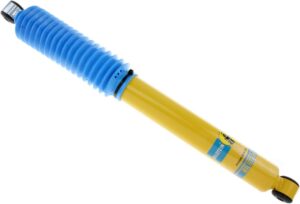 | Bilstein 24-185226 | 1997–2002 | 14.37–23.03 in | Check Price |
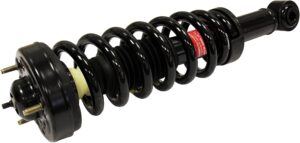 | Monroe Quick-Strut 171138 | 2007–2013 | 16.15–20.03 in | Check Price |
 | Monroe Load Adjusting 58633 | 1997–2002 | 14.25–23.00 in | Check Price |
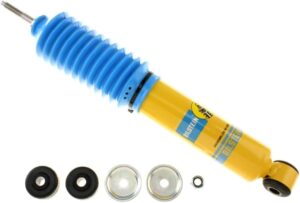 | Bilstein 24-185219 | 1997–2002 | 10.24–14.21 in | Check Price |
 | SenSen 4052 | 1997–2002 | — | Check Price |
 | Rancho RS9000XL RS999118 | 1997–2002 | 14.32–22.28 in | Check Price |
Gabriel Ultra G63717 (Editor’s Choice)
The Gabriel Ultra G63717 is the conventional rear replacement in this comparison for a supported 1997–2002 Expedition. Its twin-tube design and G-Force valving focus on everyday ride control, making it a sensible option when an adjustable rear shock or a helper coil is unnecessary.
Gabriel’s variable damping responds to suspension movement, while a chromed piston rod provides a smooth working surface at the seal. The plain shock body keeps the repair straightforward: the original main springs remain in place, and there is no additional air system or external damping dial to accommodate.
The G63717 is attractive for an ordinary rear-axle refresh on the correct suspension configuration. It is one shock, so renew both sides as a matched pair. It should not be confused with a replacement air spring or with a complete loaded assembly. The limitation is also its strength: it offers conventional damping rather than extra load support or owner-adjustable firmness. Choose it when that simpler original-style role matches the job.
Pros
- Conventional twin-tube rear replacement.
- G-Force variable damping and chromed piston rod.
- No separate air system or external adjustment.
Cons
- One rear shock, with springs and mounts separate.
- No helper spring or owner-adjustable firmness.
KYB MonoMax 565007
The KYB MonoMax 565007 is the rear choice for a supported first-generation Expedition used for demanding work. Its large-bore monotube design puts the emphasis on body control when towing, hauling or travelling on rougher roads. It is a more control-focused proposition than a basic original-style replacement.
A zinc-coated steel piston ring provides a working sealing surface, and the rubber boot protects the shaft from dirt and debris. There is no external firmness dial or surrounding helper spring. The MonoMax’s contribution comes from its damping design, with the existing main springs continuing to support the truck’s static weight.
KYB lists a rear application for both RWD and 4WD Expeditions from 1997–2002; the suspension configuration still matters, including air-leveling exclusions. Renew the rear axle as a matched pair. The trade-off for the control-focused tuning can be a firmer feel, particularly when the truck is unloaded. It is worth considering when damping control matters more than preserving the softest possible ride.
Pros
- Large-bore monotube rear damper.
- Zinc-coated steel piston ring and protective shaft boot.
- Rear application for the specified first-generation setups.
Cons
- Can feel firmer than a comfort-oriented replacement.
- No leveling assistance or external damping adjustment.
Bilstein 24-185226
The Bilstein 24-185226 B6 4600 is the rear option for a stock-height 1997–2002 4WD Expedition without air suspension. Its gas-pressure monotube construction and application-specific digressive piston make it a useful choice when the aim is controlled suspension movement while retaining the truck’s original spring layout.
Velocity-sensitive valving changes the response with the speed of suspension movement. The yellow body and blue boot are familiar Bilstein features, but the useful details are the rear-specific length and mounts: 14.37 inches compressed, 23.03 inches extended, with eye mounts at both ends. Those dimensions distinguish it from the shorter front part.
This is a focused rear-damper replacement, rather than an air-suspension repair or a lift component. It has no external adjustment dial, so there is little to set up after correct installation. Use a matched rear pair for an axle refresh. For a conventional stock-height 4WD truck, it offers a clearly defined application and a simple monotube design; a lifted or air-sprung truck needs a different part.
Pros
- Application-specific B6 4600 monotube rear damping.
- Digressive valving without an external adjustment dial.
- Defined lengths and eye-type mounts.
Cons
- Not for factory air suspension or a substantial lift.
- One rear shock, not a full vehicle set.
Monroe Quick-Strut 171138
The Monroe Quick-Strut 171138 is a complete front assembly for the listed 2007–2013 Expedition coil-spring application. It brings the damper, coil spring and upper mount together in one preassembled unit. That makes it particularly useful when renewing only the damper would leave an aged spring or mount in place.
The practical advantage is the assembled format: the spring does not have to be compressed and transferred from the old unit as part of fitting the replacement. Monroe uses an application-specific spring and OE-style component arrangement, with a protective coating to resist corrosion. The aim is to restore the intended ride height and damping, rather than raise the vehicle.
The 171138 is a sensible option when the whole supported front assembly needs renewal. One assembly supplies one side; renew a front pair together. It is not a replacement for a factory air unit. Correct installation and an alignment check remain part of the job. Compared with a bare damper, it renews more components at once, but that also makes it a larger repair than replacing an otherwise serviceable shock alone.
Pros
- Preassembled damper, spring and upper mount.
- No transfer of the old coil spring with a spring compressor.
- Application-specific spring and corrosion-resistant coating.
Cons
- One assembly; a front pair requires two.
- Not a factory air-suspension replacement or a lift kit.
Monroe Load Adjusting 58633
The Monroe 58633 rear pair is the option for a compatible 4WD Expedition that occasionally carries a heavier load or tows. Each shock has a calibrated helper coil around the damper, adding spring assistance as the rear suspension compresses. That distinguishes it from the plain shocks in this comparison: it addresses load-related sag as well as damping.
Inside, nitrogen charging helps limit aeration, while a PTFE-banded piston reduces friction against the pressure tube. All-weather fluid and a nitrocarburized rod round out a design aimed at changing road and load conditions. There is no compressor, air line or pressure adjustment to maintain, making the helper-coil approach mechanically simple.
The attraction is extra support during occasional hauling without adding an air system. The compromise is that the springs remain part of the suspension even when the truck is lightly loaded, so ride feel can change. Monroe’s load-assistance figure does not increase the Expedition’s payload, axle or towing ratings. Use the 58633 for its specified rear 4WD application rather than treating it as a universal upgrade for every Expedition.
Pros
- Rear pair combines damping with calibrated helper coils.
- Nitrogen charging and a PTFE-banded piston.
- No separate compressor or air lines.
Cons
- Helper coils can alter the lightly loaded ride.
- Not a payload increase or a universal RWD/air-suspension replacement.
Bilstein 24-185219
The Bilstein 24-185219 B6 4600 is the front counterpart for a supported stock-height 4WD Expedition without air suspension. It brings the same monotube, digressive-valving approach to the front axle, making it a logical choice when the goal is a conventional suspension refresh rather than a change in height.
This part uses a stem upper mount and a 12.7 mm lower eye. Its 10.24-inch compressed and 14.21-inch extended lengths are much shorter than the rear 24-185226, a useful reminder that similarly finished shocks are not interchangeable. The protective boot covers the shaft, and there is no external firmness dial to tune.
The appeal is a front-specific damper with straightforward fixed valving and a clearly defined application. It retains the existing springs and does not replace a complete air-suspension unit. Renew the front pair together and follow the supplied bushing orientation and mounting instructions. For a suitable standard-height 4WD truck, it complements the rear Bilstein without introducing an adjustable leveling system or a helper coil.
Pros
- Front-specific B6 4600 monotube design.
- Velocity-sensitive digressive valving.
- Defined stem/eye mounts and protective shaft boot.
Cons
- Not for factory air suspension or a lifted application.
- One front shock, without new main springs.
SenSen 4052
The SenSen 4052 is a four-damper set for a compatible 1997–2002 rear-wheel-drive Expedition with conventional rear suspension. Four bare dampers refresh both axles while retaining the original springs. That makes the set useful when the suspension feels tired at more than one corner and a standard replacement is the goal.
SenSen uses hardened chrome-finished carbon-steel rods and NOK seals in its shock construction. The rod finish provides a smooth working surface at the seal, while the simple damper layout avoids adding a helper spring or an air system to the job. The front and rear units have different mount arrangements, so they are not interchangeable despite arriving as one set.
The 4052 packages four dampers for that focused four-corner refresh. It is not the corresponding 4WD kit, and the conventional rear application excludes self-leveling suspension. It also leaves springs, mounts and other worn components to be dealt with separately. For a suitable RWD truck, the appeal is a coordinated replacement rather than a change in ride height or suspension design.
Pros
- Four dampers for a coordinated conventional RWD refresh.
- Hardened chrome-finished rods and NOK seals.
- Retains the original spring arrangement.
Cons
- Not the 4WD set or a rear self-leveling replacement.
- Main springs and other suspension components are separate.
Rancho RS9000XL RS999118
The Rancho RS9000XL RS999118 is the adjustable rear option for a stock-height 1997–2002 RWD Expedition without rear air leveling. Its nine-position knob lets the driver change damping firmness manually, giving it a clear advantage when one truck alternates between lighter everyday use and more demanding work.
The RS9000XL design uses nitrogen pressurization and a tri-tube body. A protective boot covers the rod, and the external dial provides the adjustment without replacing internal parts. This is damping adjustment: turning the knob changes resistance to suspension movement, not the spring rate, ride height or vehicle load rating.
The Rancho suits an owner who will actually use the adjustment and is comfortable finding a balanced setting for the vehicle. Set the two rear shocks consistently and keep the adjustment mechanism accessible. It is less of a fit-and-forget proposition than a fixed-valving shock, and this part is not the corresponding stock 4WD application. For the supported RWD setup, its useful distinction is that extra control over ride firmness.
Pros
- Nine-position manual damping adjustment.
- Nitrogen-pressurized tri-tube design.
- Rear application for the stated conventional RWD setup.
Cons
- Not the stock 4WD rear application.
- Manual settings need attention; no automatic leveling.
When Do the Shocks on Your Ford Expedition Need Attention?
Vibration and Repeated Bouncing
Continued body movement after a bump can justify inspecting the dampers, mounts and springs. Vibration can also come from tires, wheels or driveline parts, so a new shock should follow a diagnosis rather than serve as the first guess.
Changes Under Braking
Excessive nose dive or unstable body movement deserves attention. A weak brake pedal, pulling or a longer stopping distance also requires a proper brake and tire inspection; changing the shocks is not a substitute for repairing the cause.
Sliding or Veering
Wandering can involve alignment, tires, steering joints or suspension wear. Have the system checked as a whole, particularly if the change is sudden.
Uneven Tire Wear
Cupping can accompany poor damping, but pressure, balance and alignment also matter. Inspect the tire pattern alongside the suspension instead of assuming that every worn tread points to a failed shock.
Excessive Sway
New or worsening sway calls for checking dampers, sway-bar links, bushings, springs and loading. Keep the vehicle within its ratings and address loose or damaged components before continuing normal use.
Shopping for the Best Ford Expedition Shocks and Struts
The Gabriel G63717 is a straightforward rear replacement for a supported first-generation RWD Expedition with conventional suspension. The SenSen 4052 covers all four corners on its listed RWD models. KYB offers a firmer rear option, Rancho adds manual adjustment, and the two Bilstein models serve a conventional 4WD setup. Monroe’s 171138 is a front assembly for the stated later-generation application. In the table, length ranges are compressed–extended shock lengths in inches; a dash means that comparable dimensions are not specified here.
Choose the Right Type
A bare shock controls movement while retaining the existing main spring. A helper-coil shock adds spring assistance around the damper. A complete loaded assembly renews the damper, spring and mount together. A separate air spring supports weight but does not replace a separate damper.
Match the Vehicle and Suspension
Start with model year, drivetrain, axle and factory suspension type. First-generation RWD and 4WD applications differ, and air-leveling systems need their own parts. The Monroe 171138 serves a later front coil-spring application. A shock sized for a lift does not create that lift.
Plan the Installation
Replace dampers as matched axle pairs and inspect mounts, bushings and springs. A preassembled unit avoids transferring a compressed coil, but installation still requires proper support, torque procedures and any specified alignment checks. Use professional installation when the procedure or equipment is unfamiliar.
Look Beyond the Finish
Monotube and twin-tube designs have different construction, while valving determines how they respond. A bright finish alone does not establish ride quality or lifespan. Consider rod protection, the supported application and whether manual adjustment is useful for the way the truck is driven.
Compare the Whole Job
A single damper, a rear pair, a four-shock set and a complete front assembly are different purchases. Include worn hardware and any related suspension repairs in the comparison. Separate guides cover the best shocks for Ford Escape and the best shocks for Ford F-250; their parts are not interchangeable with Expedition applications.
Conclusion: The Best Shocks for a Ford Expedition
The Gabriel G63717 is our pick for an everyday rear replacement on a compatible first-generation RWD Expedition. The SenSen 4052 is a four-shock option for its listed RWD setup. Monroe 58633 adds rear helper-coil assistance for the listed 4WD application, KYB emphasizes control, and Rancho offers adjustable rear firmness. The two Bilsteins cover the conventional stock-height 4WD axles. For the stated later coil-spring front application, Monroe 171138 renews the spring and mount as well as the damper. Match the vehicle first, then choose the design that suits the repair.