
The best shocks for a Dyna match the bike, load and travel you need. The 11-inch Progressive 412-4045B pairs a low stance with a heavy-duty spring. Check the exact Dyna fitment and consider a longer shock if you need more travel.
Best Shocks for Dyna — Comparison Table
Progressive Suspension 412-4045B (Editor’s Choice)
The 412-4045B is the compact heavy-duty option for the matching Dyna application. Its nominal 11-inch length gives it a low-profile stance, while the heavier progressive-rate spring specification suits a different load requirement from the standard-rate 412-4037B. It remains the lead choice here when that short, load-oriented combination is the goal.
Progressive uses a double-wall steel damper body, nitrogen charging and multistage velocity-sensitive valving. The five-position cam changes spring preload to set loaded sag; it does not turn the heavy-duty spring into a softer standard-rate version. The black finish keeps the appearance restrained beside the exposed spring and damper.
The main compromise is travel. The manufacturer’s specification gives this short configuration substantially less damper stroke than the longer 412-4038B. A light solo rider should not choose the heavy-duty version on the assumption that stronger always means more comfortable. Match the load and exact bike application before making the low stance the priority.
Pros
- Compact nominal 11-inch heavy-duty configuration.
- Nitrogen-charged damping and double-wall steel body.
- Five-position cam preload adjustment.
Cons
- Shorter damper stroke than the longer options here.
- Heavy-duty spring specification may be too firm for a light solo load.
Burly B28-1253

The 13.5-inch Stiletto offers a noticeably different direction from the compact 11-inch shocks in this comparison. Its dual-spring arrangement pairs a secondary coil for smaller road inputs with a main spring intended to manage larger hits, making it attractive for a more purposeful, longer-shock Dyna build.
The black-and-red spring layout gives it a distinctive exposed look, while cam preload adjustment helps establish loaded sag. The longer configuration changes the bike’s stance and suspension movement, so belt deflection, exhaust clearance and side-stand lean need checking as part of the installation.
One application detail is especially important: Burly requires removal of the left passenger-peg mount on 1991–2005 Dyna models when fitting the 13.5-inch Stilettos to avoid belt damage. That can affect the usefulness of the bike for a passenger. Choose this model for its length and spring design only when the complete installation requirements suit the build.
Pros
- Nominal 13.5-inch Dyna Stiletto configuration.
- Dual-spring design with cam preload adjustment.
- Distinctive black-and-red appearance.
Cons
- 1991–2005 Dyna installation requires removing the left passenger-peg mount.
- Belt, exhaust and side-stand clearances need careful checking.
Progressive Suspension 412-4038B
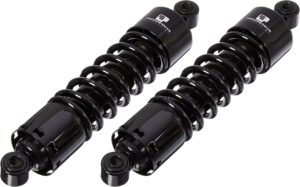
The 412-4038B is the longer standard-rate black option. Its nominal 12.6-inch configuration gives it more damper stroke than the short 11-inch 412s here, making it worth considering when preserving useful suspension movement matters more than achieving the lowest stance.
The manufacturer’s specification lists approximately 2.51 inches of damper stroke for this part, compared with approximately 1.39 inches for the 11-inch 412-4037B and 412-4045B. Those are shock-stroke measurements, not rear-wheel travel. The double-wall steel body, gas charging and five-position preload cam provide the familiar 412 feature set.
This is a useful choice for the matching Dyna application when a standard spring and longer configuration suit the rider. It is still a fixed-damping shock, and the taller setup can alter belt tension, parking lean and available clearance. Set it around the bike’s intended use rather than assuming that one length fits every Dyna.
Pros
- Longer nominal 12.6-inch standard-rate configuration.
- Approximately 2.51 inches of specified damper stroke.
- Five-position preload adjustment and gas-charged damping.
Cons
- No external rebound or compression adjustment.
- Longer length requires the appropriate bike and clearance setup.
Progressive Suspension 412-4044B
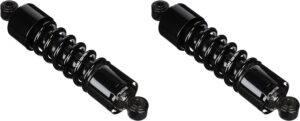
The 412-4044B offers the heavy-duty 412 approach in a nominal 12-inch black configuration. It is the useful middle comparison for an owner considering the 11-inch 412-4045B but wanting a longer shock body and more available damper stroke.
Its progressive-rate heavy-duty spring works with the gas-charged, multistage damper and five-position preload cam. Progressive’s specification lists approximately 1.89 inches of damper stroke, against approximately 1.39 inches for the short 4045 configuration. The longer format changes the stance and travel balance without adding external damping controls.
The appeal is a load-oriented spring specification with less emphasis on the shortest possible shock. The spring still needs to suit the combined rider, passenger and luggage load; winding down preload does not make it a standard-rate spring. Confirm the exact Dyna application, including any model-specific exceptions, and check the finished geometry.
Pros
- Nominal 12-inch heavy-duty configuration.
- More specified damper stroke than the 11-inch 4045.
- Five-position preload cam and gas-charged damping.
Cons
- Heavy-duty spring may be unsuitable for a light solo load.
- No independent external rebound or compression adjustment.
Progressive Suspension 412-4037B

The 412-4037B gives the compact 11-inch 412 layout a standard rather than heavy-duty spring specification. It is the more relevant comparison for a rider who wants the shorter black-shock stance but does not need the 4045 model’s heavier spring.
The double-wall steel body contains gas-charged, multistage velocity-sensitive damping. Five cam preload positions help set loaded sag within the spring’s intended range. Its nominal length and approximately 1.39-inch damper stroke put it firmly in the compact category, so the setup needs to preserve the movement that remains.
The benefit is a simple, low-profile configuration with a spring choice distinct from the heavy-duty alternative. It is not a length-adjustable shock, and preload cannot create extra travel. For rough roads or a rider who values a longer working stroke, compare the 4038 before committing to the short stance.
Pros
- Nominal 11-inch standard-rate configuration.
- Black finish with a double-wall steel body.
- Five-position preload adjustment.
Cons
- Short damper stroke leaves less room for suspension movement.
- Neither free length nor damping is externally adjustable.
Progressive Suspension 412-4036C

The 412-4036C is the nominal 12-inch standard-rate chrome option. It is a useful choice when the rider wants the familiar 412 construction and a brighter finish, with a longer configuration than the 11-inch 4037 or 4045.
Progressive combines the exposed chrome spring with a double-wall damper body, gas charging and multistage valving. The five-position cam adjusts preload for the intended load. The factory specification lists approximately 1.89 inches of damper stroke for this part, providing a concrete difference from the shorter models beyond appearance.
Its appeal is a straightforward standard-spring setup with a classic chrome look. It has no external damping adjustment, and the standard spring still needs to match the bike’s load. Check the exact model application and clearances rather than treating the shared 12-inch dimension as a universal match.
Pros
- Nominal 12-inch standard-rate configuration.
- Chrome spring finish.
- Five-position preload cam and approximately 1.89-inch damper stroke.
Cons
- No external rebound or compression adjustment.
- Spring specification must suit the actual rider and luggage load.
Burly B28-1202

The B28-1202 Slammer is the chrome, short-shock option for the specified Dyna application. Its nominal 10.5-inch eye-to-eye length makes a low rear stance the central attraction. It is a style-focused choice with a clear trade-off in available suspension movement compared with longer shocks.
The pair uses cam-style preload adjustment to help set the loaded position for the rider. Burly’s Dyna installation procedure reuses the appropriate original mounting hardware and requires clearance to be checked through suspension movement. The shocks lower the rear according to the bike’s starting configuration; they do not lower the front fork on their own.
The bright finish and compact length suit a deliberately lowered build. Do not combine them with another rear lowering kit, and do not treat the shorter length as an automatic comfort upgrade. Tire-to-fender clearance, belt movement and side-stand lean all need to remain suitable after installation.
Pros
- Compact nominal 10.5-inch Dyna configuration.
- Chrome finish and cam-style preload adjustment.
- Pair designed around the specified original mounting arrangement.
Cons
- Short configuration limits available suspension movement.
- Must not be combined with another rear lowering kit.
Best Shocks for Harley-Davidson Dyna: FAQs
These seven options range from compact lowering designs to longer rear shocks. Progressive 412-4045B remains the lead choice here for a matching build that needs the 11-inch heavy-duty configuration. Lighter loads or a preference for more damper travel can point toward a different option in this comparison. Choose the spring and length together, then set sag and clearances correctly.
Are Dyna and Sportster Shocks Interchangeable?
Do not assume so. Matching eyelets or a similar length does not establish the correct spring, damping or clearance for a different motorcycle. Choose a manufacturer-listed part for the exact Dyna model. The separate Sportster shock guide covers its own applications.
What Is the Stock Dyna Shock Length?
There is no single stock length for every Dyna. Identify the model and year, then compare the specified original length and intended ride height. Measure eye-to-eye under the condition required by the manufacturer; free length and loaded ride length are different measurements. Switchback/FLD applications also have specific part-number requirements and should not be inferred from a general FXD listing.
How Should You Choose Spring Rate and Preload?
Start with the combined rider, passenger and luggage load. A heavy-duty spring is not automatically an upgrade for a light solo rider. Preload changes the spring’s initial compression and the loaded sag; it does not change the spring’s intrinsic rate or make a heavy-duty spring equivalent to the standard version. Set both shocks consistently according to the exact instructions.
Does a Shorter Shock Improve Comfort?
Not automatically. A shorter configuration can help achieve a lower stance, but it commonly leaves less damper stroke and can reduce clearance. A longer shock can also change belt tension, geometry and side-stand lean. The goal is the appropriate loaded position and usable movement for the bike, not the lowest or tallest number in isolation.
What Needs Checking During Installation?
Use a secure motorcycle lift or support and follow the factory service procedure and the shock manufacturer’s instructions. Check the tire, fender, belt, belt guard, exhaust and swingarm through the required movement. Burly prohibits combining these shocks with another rear lowering kit. The 13.5-inch Stiletto also requires removal of the left passenger-peg mount on 1991–2005 Dyna models.
How Are the Rear Shocks Adjusted?
The cam-adjusted shocks above use preload settings to establish loaded sag. They are not adjusted by twisting a threaded lower eyelet to change free length. Use the specified spanner, support the bike as directed and set both sides consistently. Recheck belt deflection, fastener torque and clearances after installation or a meaningful setup change.
Which Dyna Shocks Are the Best Starting Point?
Progressive 412-4045B remains the lead choice for the matching compact heavy-duty application. Compare 412-4037B for a standard spring at the short length, 412-4036C or 412-4044B for 12-inch configurations, and 412-4038B or the 13.5-inch Stiletto when a longer setup is appropriate. The 10.5-inch Slammer suits a deliberately low build with the required clearance checks. Match the bike and load before deciding on the finish or stance.