The best rims for Honda S2000 should complement the car’s light, responsive character without turning wheel fitment into guesswork. Width, offset, hub size and tire clearance matter just as much as the spoke design. A wheel with the right five-lug pattern is only the starting point.
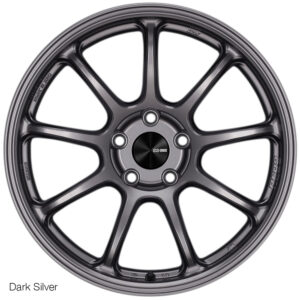
These eight choices cover light forged wheels, flow-formed alternatives and distinctive staggered options. The APEX VS-5RS is the overall pick in its S2000-specific 17×9 ET61 size. Wider configurations can suit a prepared street or track car, provided the tires, alignment and body clearance work together.
The 8 Best Rims for Honda S2000
APEX VS-5RS (Editor’s Choice)
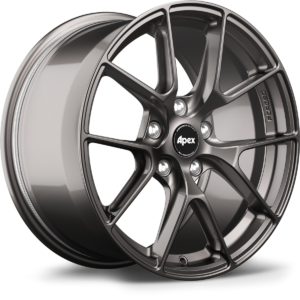
The VS-5RS makes a particularly convincing case in the S2000-specific 17×9 ET61 configuration. Its slim split spokes suit the car without overwhelming it, and the forged 6061-T6 construction keeps the stated weight to approximately 15.9 lb in this size. More importantly, the high offset was developed around the S2000 rather than borrowed from a generic five-lug fitment.
APEX machines material from the sides of the spokes and reinforces the vulnerable inner rim lip. Knurled bead seats help resist tire movement on the rim during hard acceleration and braking. These are useful details for a wheel that may spend weekdays on the road and weekends at a circuit, although they do not make it immune to pothole damage.
For a relatively straightforward square setup, APEX lists 235/40R17 tires as a direct fit on this wheel. Its 245/40R17 recommendation is typically a direct fit too, with additional negative camber encouraged for tires that run wide. Rear centering rings and the correct conical-seat nuts are required. The combination of low weight, a reinforced rim and well-documented S2000 fitment earns it the overall pick.
Pros
- S2000-specific 17×9 ET61 geometry.
- Approximately 15.9 lb in the selected size.
- Forged construction, reinforced inner lip and knurled bead seats.
Cons
- Requires rear centering rings and replacement conical-seat lug nuts.
- Wider tire choices can require additional camber.
APEX SM-10RS
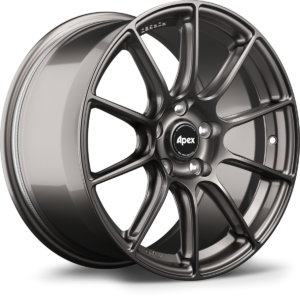
The SM-10RS offers the same useful 17×9 ET61 S2000 fitment in a more intricate ten-spoke design. There is a purposeful, technical look to the narrow spokes, particularly with the anthracite finish. APEX lists approximately 15.9 lb for this configuration, so choosing the denser-looking pattern does not mean accepting a notably heavier wheel than the VS-5RS reviewed above.
The spokes are machined along both sides to create an I-beam effect, removing material from areas that contribute less to strength. Forged 6061-T6 aluminum, a reinforced inner lip and unpainted knurled bead seats round out the design. The result is an appealing option for owners who want a detailed motorsport appearance without moving to a large-diameter wheel.
Its practical fitment advantages are much like those of the VS-5RS: APEX supports a square 235/40R17 setup, while wider tires need the alignment and clearance appropriate to their actual dimensions. The close-set spokes take more patience to clean than a simpler five- or six-spoke face. Choose the SM-10RS for its design and engineering details rather than expecting a different wheel alone to transform handling.
Pros
- Light forged wheel with side-machined ten-spoke design.
- Documented 17×9 ET61 square S2000 application.
- Reinforced inner lip and unpainted knurled bead seats.
Cons
- More spokes to clean around.
- Needs the same rear rings and appropriate conical-seat hardware as other APEX S2000 wheels.
APEX VS-5
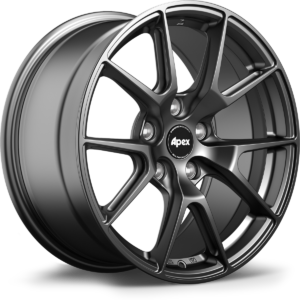
The VS-5 brings the split-five-spoke appearance of the VS-5RS to a flow-formed wheel. The satin-black 17×9.5 ET51 version has a wider, more assertive stance than the 17×9 ET61 forged options above. It makes sense for an S2000 being developed around wider tires, rather than for someone seeking the least complicated replacement for the factory wheels.
Flow forming strengthens the wheel barrel through a different manufacturing process from full forging. APEX also adds material at the inner lip, where there are no spokes to provide support, and shapes the barrel to help accommodate brake hardware. The stated weight for this particular size is approximately 19.6 lb: a meaningful trade-off against the lighter forged alternatives, but not a reason to dismiss its useful design features.
This is a fitment that needs planning. With 245/40R17 tires, APEX typically calls for at least two degrees of negative camber and rolled front and rear fenders; 255/40R17 tires generally demand more camber. For a suitably prepared car, the extra width is the attraction. For an otherwise standard road car, the narrower, higher-offset VS-5RS or SM-10RS is the more straightforward starting point.
Pros
- Flow-formed barrel with reinforced inner lip.
- Wider 17×9.5 platform for a prepared street or track car.
- Clean split-spoke design in satin black.
Cons
- Heavier than the selected forged APEX wheels.
- Recommended wide-tire setups require alignment changes and fender rolling.
Titan 7 T-S5
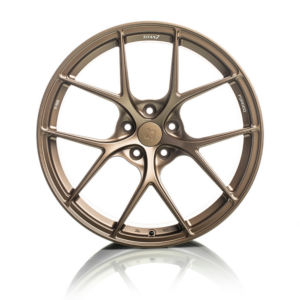
The T-S5 combines a familiar split-five-spoke shape with an unusually useful S2000-specific configuration: 17×9.5 with a +57 mm offset at both ends. The Techna Bronze finish gives the slender spokes a warm contrast against the car, while leaving the design restrained enough for a road-driven build. Titan 7 lists approximately 16.5 lb per wheel for the selected application.
Titan 7 uses a fully forged construction formed under 10,000 tons of pressure. Reinforcing ridges along the spokes, additional machining to remove unnecessary material and a strengthened inner rim flange are central to its design. Knurling at the bead seat is intended to help hold the tire in position under demanding use. These details give the T-S5 more substance than its appearance alone suggests.
The 9.5-inch width is best treated as part of a planned wheel, tire and suspension package. Titan 7 specifies this configuration for the 2000–2009 S2000, but that does not establish clearance for every tire, ride height or brake conversion. It is an attractive choice for a wide square setup when low wheel weight matters; the narrower APEX options are easier to recommend for a conservative installation.
Pros
- Fully forged split-spoke design.
- Manufacturer-selected S2000 17×9.5 +57 application.
- Approximately 16.5 lb with bead-seat knurling and reinforced inner flange.
Cons
- Wide square fitment needs a coordinated tire and suspension setup.
- Not a substitute for checking the clearance of a particular brake kit.
Titan 7 T-R10
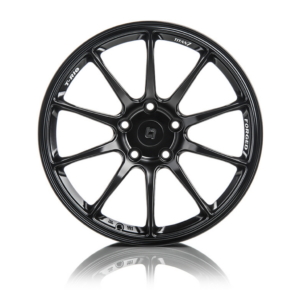
The T-R10 trades the open split-spoke appearance of the T-S5 for ten straight spokes with subtle reinforcement along their edges. In Machine Black, it has an understated, competition-oriented look that works particularly well when the wheels are not intended to dominate the car. The selected S2000 configuration is 17×9.5 +51 at the front and rear.
The wheel is fully forged, with Titan 7 listing approximately 16.8 lb for this application. Its spoke tracers add stiffness without relying on a bulky face, while a reinforced inner flange and knurled bead seats address the rim and tire interface. Machined branding provides a small visual detail without the appearance of a large applied badge.
Compared with the +57 T-S5, the same-width +51 T-R10 sits 6 mm farther outward before tire differences are considered. That is a useful distinction when balancing inner clearance against fender space. This is a strong candidate for a deliberately configured wide-tire S2000, but its stance should be chosen around the car’s alignment and body clearance, not just the look of the wheel in isolation.
Pros
- Fully forged ten-spoke construction.
- Approximately 16.8 lb for the S2000 application.
- Knurled bead seats and reinforced inner flange.
Cons
- The +51 offset places the rim farther outward than the same-width +57 T-S5.
- A wide setup requires careful tire, alignment and fender-clearance planning.
Titan 7 T-D6 LE
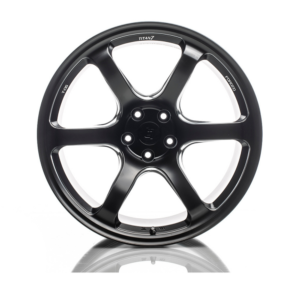
The T-D6 LE has the cleanest face of the three Titan 7 designs here. Six broad spokes give it a solid, unfussy appearance, and the Machine Black finish keeps the attention on the shape rather than polished trim. Its S2000 configuration is 17×9.5 +51 front and rear, making it a visual alternative to the T-R10 with the same nominal width and offset.
The engineering is less simple than the six-spoke face suggests. Titan 7 uses an I-beam structure through the spokes and hub area, additional machining behind the face and a reinforced inner rim flange. Like the other Titan wheels, it is fully forged and has knurled bead seats. The stated weight is approximately 17.6 lb in this application, slightly above the T-S5 and T-R10 configurations reviewed here.
That small weight penalty may be a reasonable exchange for an owner who prefers a bolder six-spoke wheel with fewer surfaces to clean. It remains a wide performance fitment, so tire dimensions, suspension settings and clearance deserve the same attention as on the T-R10. The T-D6 LE stands out for its design and construction, rather than a claim that it will suit every standard S2000 without adjustment.
Pros
- Distinctive six-spoke face with I-beam reinforcement.
- Fully forged with knurled bead seats.
- S2000-specific 17×9.5 +51 application.
Cons
- Heavier than the selected T-S5 and T-R10 versions.
- Wide fitment requires appropriate tire and body clearance.
Enkei PF01SS
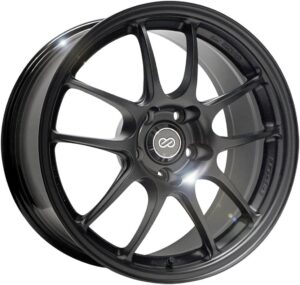
The PF01SS gives the S2000 a deeper-lipped take on Enkei’s familiar split-five-spoke design. Enkei developed the PF01SS with the S2000 in mind, and the black-machined finish makes the face and lip stand out without resorting to an oversized diameter. The wheel considered here is the 17×8 +50, 5×114.3 front option, part number 460-780-6550BKM.
Enkei’s MAT process combines a cast wheel face with a flow-formed rim, rather than making this a fully forged wheel. The design also uses knurling at the rim to help resist tire movement. Its narrower front width provides a different approach from the wide square Titan and APEX setups: the appeal is a purpose-developed wheel family with a distinctive lip and a more traditional staggered direction.
The front specification matters. It should be paired with a suitable rear wheel and tire combination rather than ordered blindly for all four corners; Enkei also lists a 17×9 +60 PF01SS rear size. The 75 mm bore requires the correct centering arrangement for the S2000’s different front and rear hubs. For an owner who likes the deep-lip appearance, these are sensible details to resolve before fitting, not reasons to overlook a well-established S2000 design.
Pros
- S2000-oriented PF01SS design with a pronounced lip.
- MAT flow-formed rim and split-five-spoke face.
- 17×8 +50 front option offers an alternative to very wide square setups.
Cons
- This front wheel needs a properly matched rear setup.
- Correct centering rings and compatible hardware are required.
Enkei PF09
The PF09 takes a different visual route from Enkei’s split-spoke wheels. Nine contoured spokes curve toward the rim, giving the dark-silver face a crisp, modern appearance. The 17×9 +45 version, part number 540-790-6545DS, combines a 5×114.3 bolt pattern with a 75 mm bore. Enkei’s S2000 application chart includes this width and offset for both axles.
The spoke profile is designed with brake clearance in mind, while Enkei’s MAT manufacturing process forms the rim to improve its material properties. The flat center cap finishes the face neatly. Enkei lists an estimated weight of 19.51 lb for this size, so the PF09 is not the lightest option here; its appeal is the combination of its contoured design, established manufacturing process and documented application.
The +45 offset gives this 9-inch wheel a more outward position than the +61 APEX fitment. It is therefore better suited to an owner prepared to plan tire width, alignment and fender clearance than someone expecting the same installation demands as a factory wheel. For a street-and-autocross build with the right supporting setup, it is a distinctive alternative that avoids the more elaborate look of a deep-lipped wheel.
Pros
- Nine contoured spokes and a clean flat center cap.
- MAT rim-forming construction.
- Manufacturer application chart includes the S2000 in 17×9 +45.
Cons
- Approximately 19.51 lb: heavier than the forged choices here.
- Outward stance requires particular attention to tire and fender clearance.
FAQ About the Best Rims for Honda S2000
S2000 Wheel Sizes and Offset
The Honda S2000 uses a 5×114.3 bolt pattern, but its front and rear hubs are different sizes: 70.1 mm at the front and 64.1 mm at the rear. A wheel can share the correct bolt pattern and still have the wrong bore, offset, brake clearance or mounting-seat shape.
For the US-market 2004 model, Honda enlarged the factory wheels from the earlier 16×6.5 front and 16×7.5 rear sizes to 17×7 front and 17×8.5 rear. The 2004 factory tires were 215/45R17 at the front and 245/40R17 at the rear. Those dimensions describe that factory configuration, not a universal specification for every aftermarket setup.
| PCD (pitch circle diameter) | Center bore | Offset | Mounting | Wheel Torque Steel | Wheel Torque Alloy | Possible Tire sizes | |
| 5×114.3 | Front hub: 70.1 mm; rear hub: 64.1 mm | Specific to the wheel, axle and tire setup | Use the correct thread and seat for the wheel and vehicle | Follow the applicable vehicle and wheel/hardware instructions | Follow the applicable vehicle and wheel/hardware instructions | 2004 US factory setup: 215/45R17 front, 245/40R17 rear. Aftermarket sizes depend on the selected wheel and clearance. |
Should an S2000 Use Staggered or Square Wheels?
A staggered setup uses different front and rear sizes, following the general approach of the factory car. A square setup uses matching wheel and tire sizes at all four corners. It can simplify rotation when the complete setup permits it, but it also changes the balance between front and rear tire widths. Choose it as part of the car’s suspension and tire plan rather than as a cosmetic shortcut.
High-offset 17×9 wheels such as the APEX ET61 options can accommodate useful tire width without the same outward stance as lower-offset choices. Wider wheels or lower offsets can require additional camber, rolled fenders or other clearance work. Tire models also differ in their actual section width, even when the size on the sidewall is identical.
Are TSX and S2000 Wheels Compatible?
Do not assume they are interchangeable because both may use a 5×114.3 pattern. The exact wheel’s center bore, width, offset, mounting seat and brake clearance must suit the axle receiving it. The S2000’s larger front hub is especially important: a smaller wheel bore will not seat correctly, and a centering ring cannot make that bore larger.
Are S2000 and Prelude Wheels Interchangeable?
There is no blanket interchange rule for these models either. Check the exact wheel and receiving car rather than relying on the Honda badge. Never pull a wheel onto the hub with its lug nuts if it does not sit flat against the mounting face.
What Hardware Is Needed?
Centering rings must match both the wheel bore and the hub on the relevant axle. APEX’s 70.1 mm S2000 wheels need rear rings for the 64.1 mm hub, and APEX requires 60-degree conical-seat nuts instead of the factory Honda nuts. Other wheels need the hardware specified for their own mounting seats. Use the applicable tightening instructions and confirm clearance throughout steering and suspension movement.
For a different Honda application, see the guide to the best rims for Honda Accord; its recommendations should not be treated as S2000 fitments.
Conclusion: the Best Rims for Honda S2000 Are…
The APEX VS-5RS is the overall choice for its light forged construction and well-documented 17×9 ET61 S2000 configuration. The SM-10RS offers a different spoke design with similar fitment advantages. Enkei’s PF01SS is worth considering for a staggered, deep-lip look, while the PF09, wider VS-5 and Titan 7 designs suit owners planning a more involved setup. Start with the wheel and tire combination that fits the car’s intended use, then choose the finish and style that make it feel complete.