The best bike for a heavy rider needs a suitable rider-weight rating, dependable wheels and a frame that fits the person using it. A large saddle or a set of fat tires can be appealing, but neither proves that a bicycle will support a particular weight.
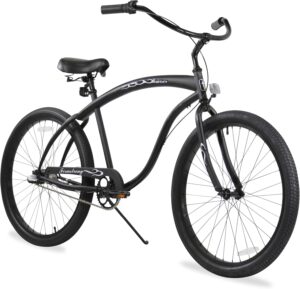
These seven heavy-duty bikes for heavy people cover different needs and limits, from the Titan’s 275 lb rating to the ZIZE A New Leaf XG’s 550 lb rating. The ZIZE is the overall specialist pick; the 400 lb Day6 and fat-tire Firmstrong models offer different riding positions, while the 300 lb cruisers suit riders within their lower allowance. For an indoor option, see the recumbent exercise bikes for heavier users.
The 7 Best Bicycles for Heavy Riders — Comparison Table
Day6 Samson
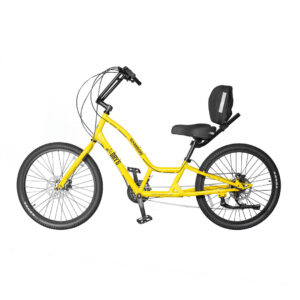
The Samson is the comfort-focused option for a rider who wants to sit more upright and pedal with the cranks farther forward. Its low U-First aluminum frame and extended handlebars create a very different riding position from a conventional mountain bike. Day6 rates it for riders up to 400 lb, making the supporting frame and components more important than the relaxed appearance might suggest.
The current specification pairs 26 x 2.4-inch Kenda tires with double-wall, 40-spoke rims and heavy 12-gauge stainless spokes. A 24-speed drivetrain gives more gearing choices than the simpler cruisers here, and 180 mm disc rotors accompany the braking system. The backrest is a defining feature; Day6 also offers a wider 16-inch Contour seat alongside its standard 13-inch Sport seat.
Choose the Samson for its seating layout and substantial wheel build, especially if a standard upright bike feels cramped. Its long wheelbase makes it less convenient to store or transport, and the relaxed geometry is aimed at comfort riding rather than technical trails. A properly sized example lets the rider make the most of its relaxed geometry.
Pros
- 400 lb manufacturer rider rating.
- Low U-First frame, extended bars and backrest.
- 40-spoke double-wall wheels and 24 speeds.
Cons
- Long wheelbase needs storage and transport space.
- Wider Contour seat is an optional upgrade.
Firmstrong Bruiser Fat Tire 7-Speed
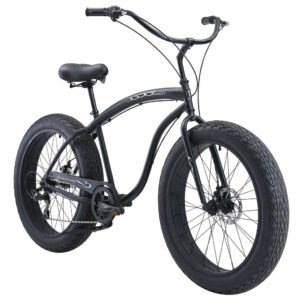
The fat-tire Bruiser adds a different platform to Firmstrong’s familiar cruiser shape. Its reinforced steel frame and 26 x 4-inch tires are designed around a 400 lb rider rating. The wider tires make most sense on packed dirt, gravel and relaxed paths, where their volume is useful; they are not a reason to treat this cruiser as a technical mountain bike.
A seven-speed Shimano drivetrain supplies more flexibility than a single-speed beach bike. Tektro mechanical disc brakes front and rear are another important difference from the standard coaster-brake Bruiser. The wheels use 36-hole alloy rims and 14-gauge stainless spokes, while the swept bars and sprung saddle retain the easygoing cruiser character.
This is the stronger choice when a traditional high-frame cruiser appeals but the standard Bruiser’s 300 lb limit is insufficient. The cost of the larger tires and supporting structure is weight: Firmstrong lists approximately 55 lb for the assembled bike. It takes more effort to lift, and its substantial top tube is less convenient to step over than the Rebel’s lower frame.
Pros
- 400 lb rider capacity for this fat-tire version.
- Seven-speed gearing and front/rear mechanical discs.
- 26 x 4-inch tires with 36-spoke alloy wheels.
Cons
- Approximately 55 lb assembled.
- High-frame layout is less accessible than a step-through.
Titan Women’s 18-Speed Pathfinder

The Pathfinder is the conventional mountain-bike-style choice in this group, with an all-terrain steel frame and a front suspension fork. Its manufacturer-stated 275 lb capacity makes it an option for a larger rider within that limit, rather than a substitute for one of the 400 or 550 lb specialist bikes. That distinction matters more than its rugged styling.
Eighteen speeds, grip shifters and front and rear derailleurs provide several gearing choices for ordinary rides. The 26-inch wheels use alloy rims with steel hubs, while front and rear V-brakes keep the brake system straightforward. The suspension fork adds a feature absent from the rigid cruisers, though it does not turn the bike into a high-end trail machine.
The appeal is a familiar layout with multiple gears, a suspension fork and a quick-release saddle adjustment. The compromise is its comparatively modest weight allowance and basic equipment. It suits an appropriately sized rider who prefers this format; someone above 275 lb should choose a model with a confirmed higher rating instead of relying on the steel frame alone.
Pros
- 18-speed drivetrain with grip shifting.
- Front suspension fork and 26-inch alloy rims.
- Straightforward front and rear V-brakes.
Cons
- 275 lb capacity is lower than the specialist options.
- Basic equipment rather than a technical trail specification.
ZIZE A New Leaf XG (Editor’s Choice)
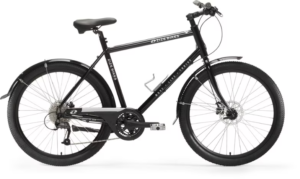
The A New Leaf XG earns the overall specialist pick because its 550 lb rider rating is supported by a complete heavy-rider design, not just a larger seat. ZIZE uses a chromoly frame and fork, reinforced wheel construction and a double-bolted seatpost. The result is a bicycle aimed specifically at riders who exceed the limits of ordinary recreational models.
The XG uses a nine-speed external drivetrain and hydraulic disc brakes. Its 26 x 2.1-inch tires sit on double-wall, 36-spoke rims, with tire liners adding a layer of puncture protection. Upright handlebars and an adjustable stem allow the riding position to be tailored without turning the bike into a deeply reclined cruiser.
It is the most compelling choice here when high rider capacity is the deciding requirement. The trade-offs are its substantial approximately 50 lb weight and the importance of specialist fitting and professional assembly. ZIZE specifies professional assembly for warranty coverage. It is designed for everyday roads and suitable paths, not an invitation to ignore surface conditions or ride beyond the bike’s intended use.
Pros
- 550 lb manufacturer rider capacity.
- Chromoly frame/fork and double-bolted seatpost.
- Hydraulic disc brakes, nine speeds and reinforced wheels.
Cons
- Approximately 50 lb bicycle weight.
- Professional assembly is required for warranty coverage.
Firmstrong Bruiser 26 in 3-Speed
The standard three-speed Bruiser is a simpler street cruiser than its fat-tire relative. It has a 19-inch steel frame with an extended layout, swept handlebars and 26 x 2.125-inch tires. Firmstrong rates this version for riders up to 300 lb, so its appeal is comfortable recreational riding within that allowance rather than the higher capacity of the fat-tire model.
The Shimano Nexus hub keeps the three gears inside the rear wheel. That gives the bike an uncluttered drivetrain without an external rear derailleur, while still offering more choice than a single-speed cruiser. Braking is by a rear coaster brake: pedaling backward applies it. It is a different setup from the seven-speed Bruiser’s hand brakes and the fat-tire model’s discs.
This is a good fit for a rider who values a straightforward cruiser and a little gearing variety on relaxed routes. Three ratios give less flexibility than the broader drivetrains in this roundup, and the coaster-brake feel will not suit everyone. Choose it for its clean layout, extended frame and easygoing road manners.
Pros
- Shimano Nexus internal three-speed hub.
- Extended steel cruiser frame and swept handlebars.
- 26 x 2.125-inch tires with a straightforward drivetrain.
Cons
- 300 lb rider limit.
- Coaster braking and only three ratios limit its versatility.
Firmstrong Rebel Fat Tire 7-Speed
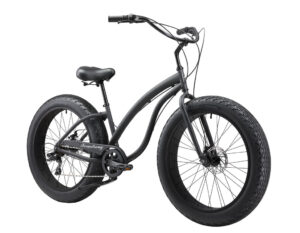
The Rebel brings the fat-tire Firmstrong format to a lower step-through frame. Its 400 lb rider rating and 26 x 4-inch tires put it in the same useful capacity category as the fat-tire Bruiser, but the 15.5-inch frame makes getting over the frame a different proposition. This is the better starting point for someone who dislikes a high top tube.
The specification includes seven-speed Shimano gearing, Tektro mechanical disc brakes and 36-hole alloy rims with stainless spokes. Swept cruiser bars and a sprung saddle favor an upright, relaxed position. The tires suit packed paths and casual mixed-surface rides, while the gearing helps make the wide-tire format more adaptable than a single-speed cruiser.
The low frame is its strongest reason to choose it over the Bruiser Fat Tire, rather than a claim that one is universally more comfortable. It remains a substantial approximately 55 lb bike with bulky tires, so lifting it onto a rack is still a consideration. Match the frame to the rider’s reach and leg length; step-through access does not eliminate the need for a proper fit.
Pros
- 400 lb manufacturer rider rating.
- Lower step-through steel frame.
- Seven speeds, mechanical disc brakes and 4-inch tires.
Cons
- Approximately 55 lb assembled.
- Bulky tires and frame complicate storage and lifting.
Firmstrong Urban Lady 26 in Single-Speed
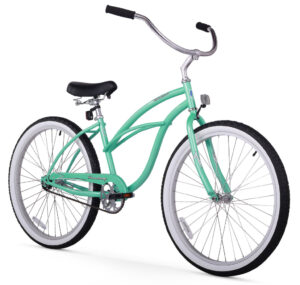
The 26-inch single-speed Urban Lady is the least complicated cruiser here. Its step-through steel frame, swept bars and sprung saddle suit easygoing rides on mostly level routes. The manufacturer lists a 300 lb rider limit for this specific model. That makes it a useful recreational option within that allowance, rather than a high-capacity replacement for the specialist bikes.
With one gear and a rear coaster brake, there are no gear shifts to manage and no derailleur to adjust. The 26 x 2.125-inch whitewall tires and alloy wheels give it the classic beach-cruiser look. The handlebar and seat adjustments allow the fit to be refined, while the low frame simplifies stepping on and off.
Choose it when simplicity and casual paved riding matter more than speed or climbing range. The single gear is the main limitation on hilly routes, and the coaster brake requires the rider to be comfortable with backward-pedal braking. The Urban Lady name covers several sizes and drivetrains; this review concerns the 26-inch single-speed version, not the 24-inch or geared models.
Pros
- Simple single-speed drivetrain and coaster brake.
- Step-through frame and adjustable cruiser riding position.
- 26-inch alloy wheels with 2.125-inch whitewall tires.
Cons
- 300 lb rider limit.
- One gear is restrictive for sustained climbing.
How to Pick the Best Bike for a Heavy Rider
Start with the manufacturer’s rider or total-load rating for the exact bicycle. The distinction matters: a total-load figure may include luggage and accessories. Do not infer capacity from a steel frame, tire width or the weight another owner says they have carried.
Why Choose a Heavy-Duty Bike?
A properly specified heavy-duty bicycle can provide a suitable frame, wheels and riding position for a rider who exceeds an ordinary model’s limit. The practical benefit is a bicycle built around the intended rider and route, with a fit that makes it pleasant to use regularly. The best bikes for big men and other larger riders are the ones that match the individual’s weight, proportions and intended routes.
Tough Wheels and Suitable Tires
Look at the complete wheel build: rims, spokes, hubs and tires work together. Double-wall rims and an appropriate spoke specification can be useful features, but spoke count alone is not a capacity certificate. Set pressures within the bike and tire manufacturers’ recommendations and have damaged or persistently loose wheels inspected. Fat tires add volume and suit some loose surfaces; they do not automatically increase the bicycle’s permitted load.
A Robust Frame That Fits
Steel, chromoly and aluminum can all be used in suitable bicycles. Frame design, components and the actual rating matter more than choosing a material in isolation. Check reach, standover height, leg extension and the ability to operate the brakes comfortably. A step-through frame can simplify access; an extended or crank-forward design changes the riding position. Neither is automatically the right fit for every larger rider.
A Comfortable Saddle
A wider saddle may help some riders, but width and extra padding are not universal solutions. The saddle needs to support the rider in the intended position, with the seatpost correctly inserted and securely clamped. A bike shop fitting is valuable when reach, saddle position or getting on and off feels awkward.
Price and Long-Term Practicality
Allow for professional assembly, a suitable helmet, routine servicing and replacement tires as well as the bicycle itself. Specialist high-capacity models can cost more because of their frames and wheel builds. Also consider whether the bike can be lifted, stored and transported with the equipment available at home.
Gears, Brakes and Riding Surface
A single-speed cruiser suits relatively flat, relaxed rides. More gears offer additional ratios, but the range and gearing are more important than simply having the largest speed count. Internal hubs keep the drivetrain tidy; external derailleurs offer other gearing choices. Coaster, rim and disc brakes feel different, so choose a system that the rider can operate confidently. A front suspension fork does not make every mountain-bike-style bicycle suitable for technical trails.
So, What’s the Best Bike for a Heavy Person?
The ZIZE A New Leaf XG is the overall specialist choice for its 550 lb rating and purpose-built frame, wheel and seatpost design. Day6’s 400 lb Samson offers a distinct crank-forward position with a backrest, while the 400 lb Bruiser Fat Tire and Rebel provide high-frame and step-through cruiser options. The standard Bruiser and Urban Lady are 300 lb alternatives for relaxed riding; the Titan’s limit is 275 lb. Pick by the rider’s actual requirements, and keep those different limits separate.