Choosing the best shocks and struts for PT Cruiser models starts with the job the suspension needs. A complete front assembly renews the spring and mount as well as the damper; a rear shock replacement leaves the separate rear spring in place. Both can improve a tired car, but they are different repairs.

These ten options cover specific 2001–2010 PT Cruiser applications, with body-style restrictions on some assemblies. SENSEN 10110-FS-SS remains the overall front-assembly choice for a matching car. The comparison also includes other complete front units, conventional rear shocks and a bare front strut for owners retaining serviceable springs and mounts.
Best Shocks and Struts for PT Cruiser — Comparison Table
SENSEN 10110-FS-SS (Editor’s Choice)
The 10110-FS-SS takes the complete-assembly route to a front suspension refresh. The spring, strut and upper mounting components arrive assembled, making it useful when the existing springs and mounts are as tired as the dampers. It remains the overall front choice for a matching PT Cruiser because that approach deals with several wear items together.
SENSEN’s shock and strut construction uses hardened chrome-finished carbon-steel rods and NOK seals. The smooth rod surface and sealing design help protect the hydraulic working area, while the assembled spring-and-mount format removes the need to dismantle the old spring unit during an ordinary complete-unit replacement.
This is a conventional road-car replacement with fixed damping and spring specifications. The main trade-off is scope: renewing a complete assembly may be unnecessary if the original spring and mount remain in excellent condition. For a broader front-end refresh, however, the convenience is easy to appreciate.
Pros
- Preassembled front spring, strut and mounting components.
- Hardened chrome-finished rods and NOK sealing design.
- Useful when several front-assembly wear items need renewal.
Cons
- No adjustable ride-height or damping settings.
- More components to replace than a bare strut.
Monroe Quick-Strut 171592

The 171592 is the complete front option from Monroe’s Quick-Strut range. Its application-specific spring, strut and upper mount are designed to work as a unit, making it an appealing alternative to mixing a fresh damper with an aged spring or noisy mount.
The assembly includes the coil spring and upper mounting parts, so a normal complete-unit replacement does not require transferring the old compressed spring. Monroe designs the spring around the OE ride-height target and uses protective coatings alongside its tube and weld construction. Its current application information lists the front of the 2001–2010 PT Cruiser.
The benefit is a coordinated replacement of the front corner’s main service components. It is not a height-adjustable sports suspension, and installing the assembly still requires the correct tools, torque settings and alignment checks. Choose it when refreshing the complete unit makes more sense than retaining the old spring and mount.
Pros
- Complete front spring, strut and upper-mount assembly.
- Application-specific spring and ride-height target.
- No old-spring transfer during a complete-unit replacement.
Cons
- No ride-height or damping adjustment.
- Installation and alignment checks still require proper equipment.
KYB Gas-a-Just 553333

The 553333 is the control-focused rear option. KYB’s Gas-a-Just monotube separates the hydraulic working area from its high-pressure nitrogen chamber with a floating piston. That helps keep gas out of the working fluid as the rear suspension cycles over repeated road inputs.
KYB specifies the valving for the PT Cruiser rather than treating the unit as a universal shock. The current application guide lists the 2001–2010 car at the rear. There is no external knob or electronic controller: the response comes from the fixed mechanical design and calibration.
It is worth comparing with the Excel-G rear when more deliberate damping control is the priority. That does not guarantee a softer ride, especially compared with a worn shock that has lost much of its resistance. The separate rear springs remain in place, and their condition still affects ride height and comfort.
Pros
- Gas-a-Just monotube with separate gas and fluid chambers.
- PT Cruiser-specific rear calibration.
- Manufacturer-listed 2001–2010 rear application.
Cons
- No external damping adjustment.
- Firmer control is not a guarantee of a softer ride.
Monroe OESpectrum 5989

The 5989 is the more comfort-conscious conventional rear alternative. Monroe’s OESpectrum design aims to control suspension movement while filtering impact-related noise and harshness, making it a natural option for a PT Cruiser used mainly on ordinary roads.
Its Twin Technology system is mechanical valving rather than an electronic suspension mode. The model combines full-displaced valving, a PTFE-banded piston, all-weather fluid and nitrogen charging. The piston band supports consistent sealing, while the gas charge helps reduce aeration as the damper works.
Monroe lists this exact rear shock for the 2001–2010 PT Cruiser, including the wagon and convertible in its application catalog. It is a useful damping refresh when the rear springs are still serviceable. It does not renew those springs, add air support or compensate for damaged bushings elsewhere in the suspension.
Pros
- OESpectrum valving aimed at control with reduced harshness.
- PTFE-banded piston and all-weather fluid.
- Gas-charged rear replacement.
Cons
- Rear springs and other wear parts remain separate.
- No adjustable damping or air-assisted leveling.
SENSEN 2190-RS

The 2190-RS is the straightforward SENSEN rear replacement option. These are rear shock absorbers rather than complete spring-and-strut assemblies, so they suit a job focused on damping while retaining sound original springs.
The design uses the brand’s hardened chrome-finished rod and NOK sealing approach. Its eyelet-style mounting format is distinct from the large spring-seat assemblies used at the front. With no coil spring wrapped around the damper, it is a simpler rear-axle service part than a loaded front strut.
The appeal is an uncomplicated road-car replacement without adjustment knobs, air lines or a spring change. Its fixed calibration suits a conventional suspension refresh. Check the exact application and replace the rear axle pair consistently; sagging springs or worn mounts need their own repair.
Pros
- Conventional rear-shock replacement format.
- Hardened chrome-finished rods and NOK seals.
- Separate from the front spring-and-strut assemblies.
Cons
- Does not renew rear springs or set ride height.
- No external adjustment or air support.
KYB Excel-G 343385

The 343385 is the KYB rear choice for restoring the car’s original handling character rather than deliberately changing it. Excel-G uses a gas-charged twin-tube layout, giving it a different construction and brief from the Gas-a-Just monotube in this comparison.
A seamless working cylinder is paired with a Teflon-coated piston band, while the chrome-plated rod and multi-lip seals help reduce wear and keep contamination away from the working surfaces. KYB also uses solid mounting eye rings and bolt bushings. Its current guide lists the exact 343385 for the rear of the 2001–2010 PT Cruiser.
That makes it a sensible everyday option when the aim is a conventional damping refresh with OE-style calibration. There are no driver-selected settings to manage. It will not transform the car into a sports model, and the separate springs and suspension joints still determine much of the overall ride.
Pros
- OE-style Excel-G rear calibration.
- Seamless cylinder and Teflon-coated piston band.
- Chrome-plated rod and multi-lip seals.
Cons
- No driver-adjustable damping.
- Spring and mounting wear must be addressed separately.
KYB Strut-Plus SR4053

The SR4053 is KYB’s complete front-assembly alternative. It combines the strut, spring and mount in a preassembled unit, making it attractive when the job calls for more than a bare damper. The aim is to restore the intended ride height and handling with a coordinated set of components.
KYB specifies a fatigue-tested coil spring with a corrosion-resistant coating. The complete format removes the need to transfer a compressed spring from the old unit, while keeping the focus on an application-specific replacement rather than an adjustable lowering system.
The body-style restriction deserves attention: KYB’s current guide lists the 2001–2008 PT Cruiser wagon and the 2009–2010 PT Cruiser. It should not be assumed to cover an earlier convertible. Where the application matches, it offers a useful same-brand front route alongside the appropriate KYB rear dampers.
Pros
- Preassembled strut, spring and mounting components.
- Fatigue-tested spring with a protective coating.
- Designed around the intended ride height and handling.
Cons
- Earlier convertible applications are not listed in the current guide.
- No adjustable damping or ride-height settings.
Gabriel ReadyMount G56965

The G56965 is another complete front option, built around Gabriel’s Ultra strut. ReadyMount packages the strut with the coil spring and surrounding service components, making it useful when the existing mount, boot or spring is also due for renewal.
Gabriel lists an upper mount, spring seat, boot, bumper and coil spring as part of the preassembled design. Those supporting pieces matter because replacing only a damper can leave a noisy mount or deteriorated protective boot in service. Gabriel lists G56965 as a complete front unit for the 2001–2010 PT Cruiser.
Its strength is the breadth of the assembly refresh, without transferring the old compressed spring. The trade-off is that serviceable original parts are replaced along with worn ones. It is a conventional replacement route, so owners looking for adjustable height or a deliberately lowered stance need a different suspension system.
Pros
- Complete front unit built around an Ultra strut.
- Mount, spring seat, boot, bumper and spring included.
- Manufacturer-cataloged PT Cruiser application.
Cons
- Replaces more components than a bare damper repair.
- No adjustable height or damping settings.
FCS 1332335

The 1332335 is the uncomplicated complete-front-assembly choice from FCS. Its main attraction is the assembled spring-and-strut format: the old unit can be removed as a unit rather than dismantled to transfer the spring during a normal complete replacement.
The assembly brings together the damper, coil spring and upper mounting components. That approach is useful when age has affected several parts of the front corner, and it avoids relying on an old mount simply because only the damper has begun to leak. The 1332335 serves the corresponding PT Cruiser front application rather than the separate rear-shock position.
Choose it for the matching conventional suspension job, with the same care over installation and alignment as any other complete strut. Preassembly reduces spring-transfer work; it does not make the entire repair tool-free. Its fixed setup suits a standard replacement job rather than an adjustable performance suspension.
Pros
- Preassembled front spring-and-strut unit.
- No old-spring transfer during complete-unit replacement.
- Renews multiple front-assembly service components together.
Cons
- Proper installation tools and alignment checks are still needed.
- No height or damping adjustment.
Monroe OESpectrum 71592
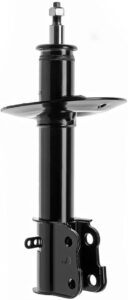
The 71592 is the choice for a more selective front repair. It supplies the OESpectrum strut without a complete new spring-and-upper-mount assembly, making it relevant when the original spring and surrounding parts are still in good condition.
Monroe’s design uses application-specific valving and all-weather fluid, with a PTFE-banded piston to support consistent sealing between the piston and pressure tube. The spring seat is part of the strut body, but the coil spring, upper mount, boot and bumper must be retained or renewed as the repair requires.
The official application lists the front of the 2001–2010 PT Cruiser. Its advantage is the ability to keep serviceable original components; the trade-off is the labor and equipment needed for spring transfer. It makes sense for a properly assessed repair, while a complete assembly is more convenient when several related parts are worn.
Pros
- OESpectrum front strut for the listed PT Cruiser application.
- Application-specific valving and PTFE-banded piston.
- Allows serviceable original spring and mount components to be retained.
Cons
- Spring transfer requires appropriate equipment and procedure.
- Not a complete new spring-and-mount assembly.
Frequently Asked Questions About Shocks for PT Cruiser
How Do You Pick the Best Shocks and Struts for a PT Cruiser?
Start with the exact year, body style and suspension equipment of the PT Cruiser, then identify the axle. The PT Cruiser uses front strut assemblies and separate rear dampers. A complete front unit includes a spring and mount; a bare strut does not. The KYB SR4053 has specific wagon/body-year restrictions, so a broad model-name match is not enough.
Complete Assembly or Bare Strut?
A complete assembly is convenient when springs, mounts and protective parts are worn as well as the damper. It avoids transferring the old compressed spring during a normal complete-unit replacement. A bare strut can be appropriate when the original spring and mounting parts remain serviceable, but the spring-transfer work needs suitable equipment and a correct procedure.
What Happens to Ride Height?
Springs support the car’s static weight; dampers control movement. A new application-specific spring in a complete front assembly can help restore the intended height where an old spring has sagged. A rear shock change does not replace the separate rear springs or act as a lowering or lift kit.
Which Construction Details Matter?
Seals, rod finish, cylinder construction and application-specific valving all affect how a damper works. Gas charging helps reduce aeration, but neither a monotube nor a twin-tube layout is automatically best for every driver. Gas-a-Just emphasizes monotube control; Excel-G focuses on the original handling character; OESpectrum combines damping control with attention to road harshness.
What Else Should Be Checked?
Inspect mounts, bushings, springs, tires and alignment rather than diagnosing every vibration as a failed shock. Persistent bouncing, a significant oil leak or damaged mounting parts justify attention, but a damper cannot cure an unrelated steering or tire fault. Replace dampers consistently in axle pairs and follow the specified tightening and alignment procedures.
Do Finish and Warranty Matter?
A protective finish and sound boots help limit corrosion and contamination, particularly where road salt is common. They do not make a damper immune to damage. Read the manufacturer’s current warranty terms and keep the purchase documentation; a warranty is not a prediction of service life.
Which Option Is the Best Starting Point?
SENSEN 10110-FS-SS remains the overall front-assembly choice for a matching car. Monroe Quick-Strut, KYB Strut-Plus, Gabriel ReadyMount and FCS offer other complete front routes, while Monroe 71592 suits a repair that retains good springs and mounts. At the rear, compare the Gas-a-Just, Excel-G, OESpectrum and SENSEN designs according to the damping character and application the car needs.
For another maintenance item, see the guide to the best battery for a Chrysler PT Cruiser.